Custom Drapery for Denver Homes: A Designer's Guide to Fabric, Pleats, and Hardware
Custom drapery transforms a Denver home faster than any other window treatment. Here is how to choose fabric weight, pleat style, and hardware that suit Colorado light and architecture.
Updated September 14, 2026
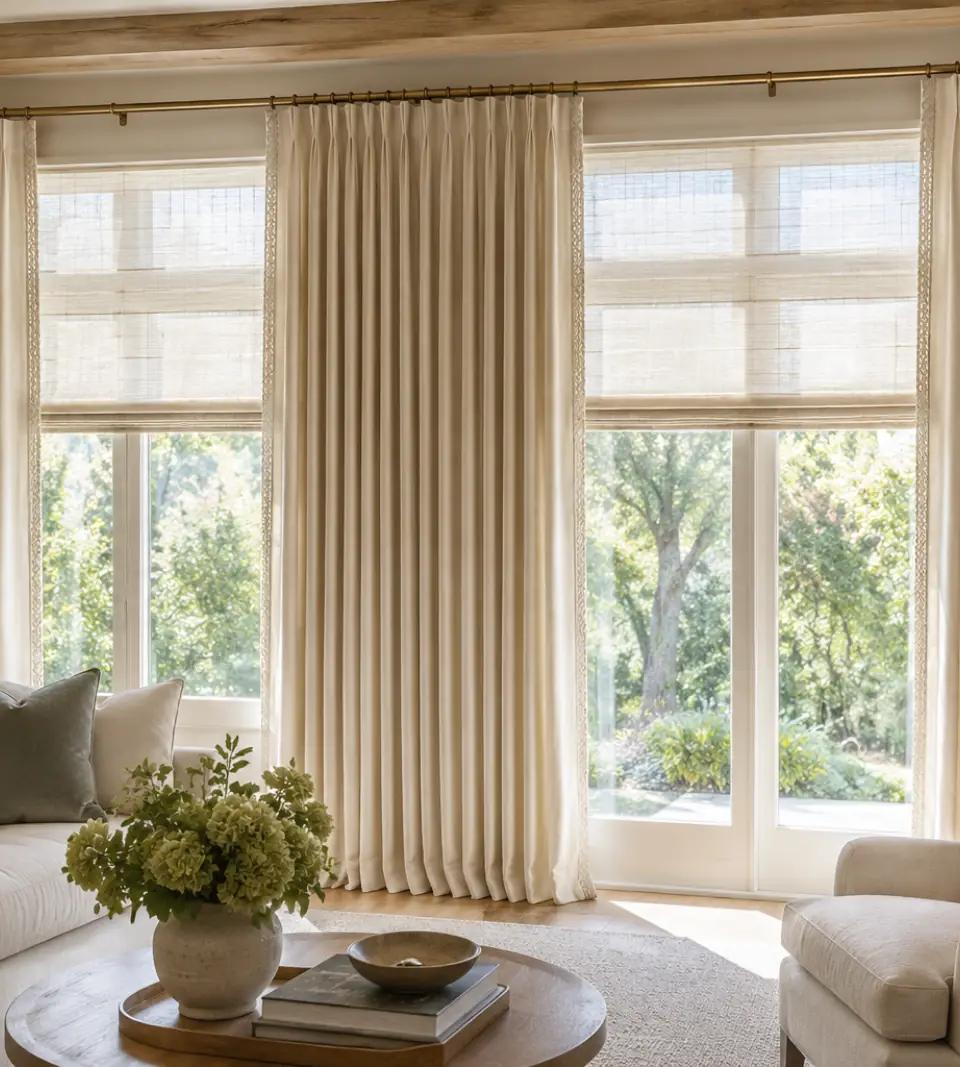
Nothing softens a room like custom drapery. In Denver, where ceilings often soar to ten or twelve feet and great-room windows stretch wall to wall, drapery is the single most powerful tool for adding warmth, acoustic comfort, and that finished couture feeling. After designing drapery for hundreds of Front Range homes, here is what actually works.
Why Custom, Not Ready-Made
Ready-made panels are sized for an 84-inch ceiling and a small window. Denver homes are not built that way. Custom drapery is cut to your ceiling height, your window width plus return, lined for our intense UV, and weighted to hang plumb in a dry climate that wants to wrinkle everything.
Choosing the Right Fabric
Three fabric families dominate our Denver projects:
- Linen blends for casual luxury. Beautiful texture, gentle filtering of light. Best in primary bedrooms and great rooms with north or east exposure.
- Velvet for drama and acoustic warmth. Stunning in formal dining rooms and theater rooms. Pairs beautifully with the dark wood trim common in Hilltop and Country Club homes.
- Performance sheers and silks layered over Hunter Douglas roller or roman shades. This is the couture move for west-facing great rooms in Greenwood Village and Cherry Hills Village.
Pleat Styles Explained
The pleat is the personality of the drape:
- Euro pleat: pinched at the top. Clean, modern, our most-requested style for new construction in Castle Pines and Lone Tree.
- French pleat: classic three-finger pleat. Traditional and tailored. Right at home in Wash Park bungalows and Cherry Creek tudors.
- Ripple fold: continuous soft waves on a track. Best for very wide openings and contemporary architecture.
- Inverted pleat: flat front, pleated behind. Tailored and almost suit-like, perfect in studies and formal rooms.
Hardware Matters More Than You Think
Hardware sets the tone before anyone notices the fabric. Hand-forged iron reads traditional. Brushed brass or matte black reads modern transitional. For ceilings over nine feet, we usually recommend mounting the rod within three inches of the ceiling and extending past the window frame by 8 to 12 inches. That single move makes windows look 30 percent larger.
Layering with Shades
Drapery alone rarely solves Denver light. We almost always layer panels over a functional shade, usually a Hunter Douglas Designer Roller, Sonnette, or Pirouette. The shade handles privacy and UV, the drapery handles softness and beauty. Both can be motorized to a single PowerView remote or app.
Investment and Timeline
Custom drapery in Denver typically runs 1,200 to 3,500 dollars per window opening fully installed, depending on fabric and complexity. Lead time is six to ten weeks for most fabrics. We measure, present fabric and hardware samples in your home, and install with our white-glove team.
Where to Start
Pick one room. The primary bedroom or great room is almost always the highest-impact place to begin. Book a complimentary in-home consultation and we will walk the space, show you fabric in your actual light, and build a drapery plan you can phase in over time.
Frequently Asked Questions
How much does custom drapery cost in Denver?
Custom drapery in Denver typically runs 1,200 to 3,500 dollars per window opening fully installed, depending on fabric, fullness, lining, and hardware. We provide a written quote at the end of your in-home consultation.
How long does custom drapery take to make?
Most custom drapery in Denver takes 6 to 10 weeks from fabric approval to installation. Specialty fabrics and hand finished details can extend that to 12 weeks.
Can drapery be motorized?
Yes. We motorize drapery with Hunter Douglas PowerView, Lutron, or Somfy systems, and we integrate with most smart home platforms including Control4, Savant, and Apple HomeKit.
What fabric works best for Denver light?
For sunny south and west facing rooms we recommend performance linens, polyester linen blends, or solution dyed fabrics that resist UV fading. Cotton and silk do best in north and east facing rooms.
Do I need to layer drapery with a shade?
Not always, but usually. In Denver we recommend a functional shade behind drapery for daytime privacy, UV control, and energy efficiency. The drapery then provides softness, acoustic warmth, and finished style.
Serving Denver since 1999
Blinds Couture Showroom
590 Quivas St
Denver, CO 80204
(720) 729-0091

Blinds Couture
Denver's premier custom window treatment studio
With over 25 years serving Colorado homeowners and designers, Blinds Couture brings expert knowledge in custom drapery, blinds, shades, shutters, and motorized window treatments. Our team combines design expertise with hands-on craftsmanship to create beautiful, functional spaces.
Learn more about our team