Shop Roman Shade Ideas: Elevate Your Space with Blinds Couture's Versatile Collection
Discover timeless roman shade ideas to enhance any space. Explore our gallery for stylish, functional designs perfect for every room in your home.
Updated October 5, 2026
Shop Roman Shade Ideas: Elevate Your Space with Blinds Couture's Versatile Collection
Roman shades occupy a rare position in the window treatment world. They deliver the softness and warmth of fabric with the clean functionality of a shade. When raised, they fold into a tailored stack at the top of the window. When lowered, they present a smooth, uninterrupted panel of material that filters or blocks light depending on the fabric and lining selected. No other window treatment bridges the gap between decorative and functional with this kind of elegance.
For Denver homeowners, interior designers, and builders, roman shades are one of the most versatile custom window treatments available. They work in kitchens where drapery panels would be impractical. They work in bathrooms where privacy demands a treatment that covers the full window. They work in bedrooms where blackout performance matters. They work in living rooms where the window treatment needs to be beautiful enough to anchor the design but restrained enough not to compete with the view.
This guide explores every major roman shade style, the fabrics that bring each style to life, and the design decisions that make the difference between a shade that simply covers a window and one that elevates the entire room.
The Four Primary Roman Shade Styles
Roman shades are defined by how the fabric folds when the shade is raised. Each fold style creates a different visual character, and the right choice depends on the room's design direction, the fabric weight, and the level of formality you want.
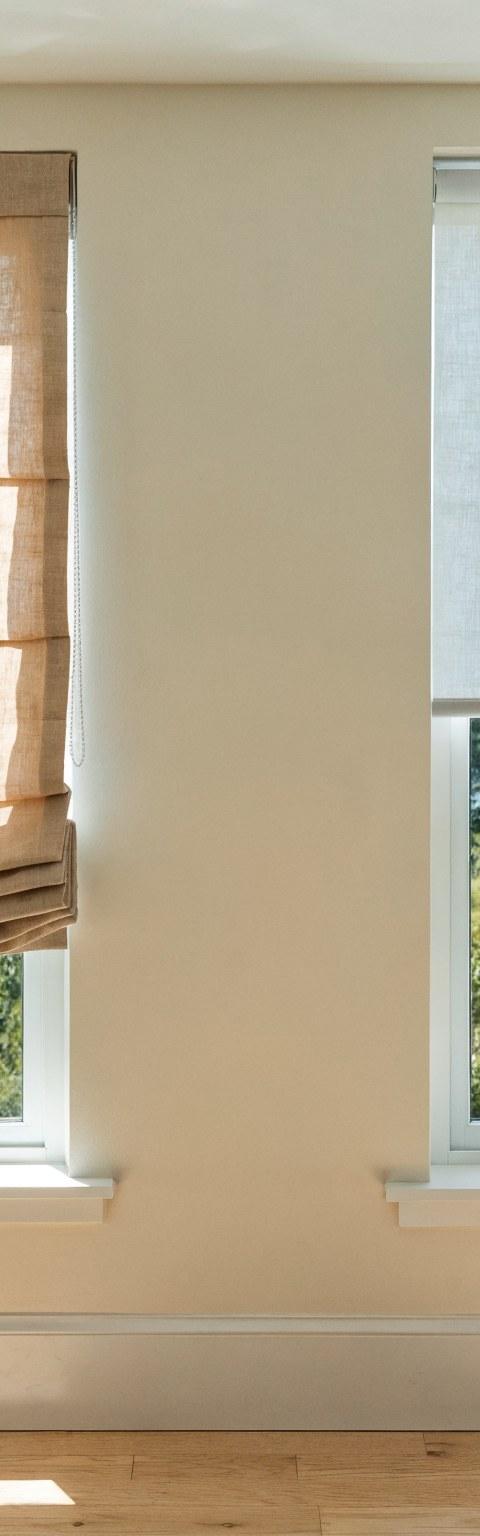
Flat Roman Shades are the most streamlined option. When lowered, the shade presents a completely flat panel of fabric with no visible folds or gathers. When raised, the fabric stacks into crisp, even horizontal folds. Flat roman shades are the natural choice for modern, contemporary, and warm minimalism interiors. They showcase the fabric itself without the distraction of structural pleating. If you have selected a bold pattern or a textured weave, a flat roman shade lets the material speak.
Flat romans also work exceptionally well in small windows and in spaces where multiple shades sit side by side. The clean lines create a unified, architectural look across a row of windows that more structured styles cannot achieve as easily.
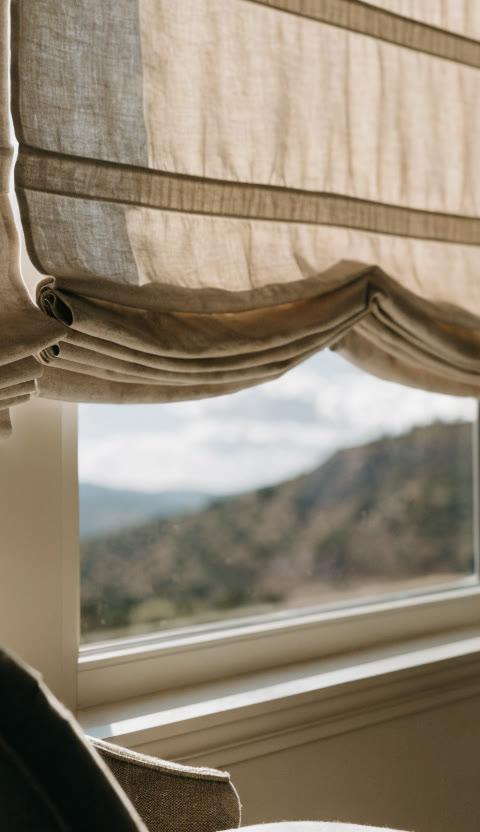
Relaxed Roman Shades introduce a gentle curve at the bottom of the panel. Instead of a straight horizontal hem, the fabric dips slightly in the center, creating a soft, organic smile shape. This subtle detail transforms the shade from geometric to graceful. Relaxed romans are the most popular style among Blinds Couture's residential clients because they add warmth and softness without sacrificing the clean profile of a shade.
The relaxed style is particularly effective in linen and lightweight cotton fabrics, where the natural drape of the material accentuates the curve. In kitchens, breakfast nooks, and informal living spaces, a relaxed roman shade feels inviting without being fussy.
Hobbled Roman Shades (also called waterfall or teardrop shades) maintain visible horizontal folds even when the shade is fully lowered. The fabric cascades in soft, evenly spaced loops from top to bottom, creating continuous texture and visual depth. When raised, the loops stack more densely, but the cascading character remains.
Hobbled romans add significant visual richness to a window. They are a strong choice for transitional and traditional interiors, dining rooms, and bedrooms where the window treatment is intended to be a focal point. The continuous folds also add a layer of insulation because of the air trapped between the fabric layers.
Balloon Roman Shades are the most decorative option. The bottom of the shade gathers into rounded, billowing poufs that create a romantic, gathered appearance. Balloon shades require lightweight, drapeable fabrics to achieve their characteristic fullness. They are most at home in traditional bedrooms, powder rooms, and spaces that embrace a softer, more ornamental design language.
Balloon romans are less common in Denver's current design landscape, which tends to favor cleaner lines, but they remain a beautiful choice for period homes, Victorian restorations, and clients who want their windows to make a distinctly elegant statement.
Fabric Selection for Roman Shades
The fabric you choose shapes everything about how your roman shade looks and performs. Unlike drapery, where the fabric hangs freely and gravity does much of the styling work, a roman shade requires fabric that folds predictably, stacks neatly, and lies flat when lowered. Not every fabric is suited to every roman shade style.
Linen and linen blends are the most requested fabrics for roman shades in Denver homes. The natural texture of linen adds warmth and character to the shade, and the fabric's moderate weight creates clean folds in flat and relaxed styles. Pure linen wrinkles, which adds to the relaxed, lived-in aesthetic that many homeowners prefer. Linen-poly blends offer the same look with better wrinkle resistance.
Cotton and cotton blends provide a smoother, more structured fold than linen. They are ideal for flat roman shades where a crisp, tailored appearance matters. Cotton sateen adds a subtle sheen that catches light beautifully when the shade is lowered.
Woven and textured fabrics bring depth to roman shades. Grasscloth-inspired weaves, herringbone, and bouclé create visual interest even in neutral colorways. These textures are particularly effective in mountain homes and organic modern interiors across the Colorado Front Range.
Patterned fabrics find their best expression in flat roman shades, where the uninterrupted panel displays the full pattern without distortion from folds. Geometric prints, botanical motifs, and stripe patterns all work well. The key is ensuring the pattern scale is proportional to the window size. A large-scale print on a small window overwhelms the space, while a small-scale pattern on a large shade can read as visual noise.
For a comprehensive exploration of fabric options and how Colorado's climate influences material selection, see our guide: Fabric First: How to Choose Elegant Draperies for Luxurious Window Treatments.
Lining Options and Light Control
Roman shades offer flexible light control depending on the lining selected. The same fabric can produce dramatically different results depending on what is behind it.
Unlined roman shades allow the most light through. The fabric filters sunlight, softening glare while maintaining a bright, airy room. Unlined shades work well in spaces where natural light is a priority and privacy is less of a concern, such as living rooms and kitchens that face a private yard.
Standard lined roman shades add a layer of cotton-poly lining behind the face fabric. This improves the shade's opacity, protects the fabric from UV damage, and gives the shade a more substantial, finished appearance. Standard lining is the minimum recommendation for most installations.
Blackout lined roman shades eliminate light transmission entirely when the shade is lowered. This is essential for bedrooms, nurseries, media rooms, and any space where complete darkness is needed. Blackout lining also provides superior insulation, which is a practical advantage in Colorado homes dealing with extreme temperature variation between summer and winter.
For spaces that need both beauty and total darkness, roman shades pair beautifully with decorative drapery panels. The shade handles the light-blocking function while the drapery frames the window. This layered approach is one of the most popular configurations among Blinds Couture's design clients.
Motorization and Smart Home Integration
Modern roman shades can be fully motorized, raising and lowering with a remote control, a wall-mounted keypad, a smartphone app, or voice commands through home automation systems. Motorized roman shades from brands like Hunter Douglas and Lutron integrate with platforms including Apple HomeKit, Google Home, Amazon Alexa, and Control4.
Motorization is not just a convenience feature. It is a practical solution for windows that are difficult to reach, such as those above bathtubs, behind furniture, or in two-story great rooms. It also eliminates exposed cords, which is a safety consideration in homes with children and pets. Since the federal cordless transition took effect in June 2024, motorized and cordless operation have become the standard for all new window treatment installations.
For more on the cordless transition and what it means for your home, see our article: The Best Cordless Blinds and Cordless Window Shades for Right Now.
Roman Shades Room by Room
Kitchen. Roman shades are one of the best window treatments for kitchens. They sit flush within the window frame (inside mount) or just above it (outside mount), keeping fabric away from countertops, sinks, and cooktops. A flat roman in a performance fabric or woven texture adds design interest without the maintenance concerns of drapery panels in a cooking environment.
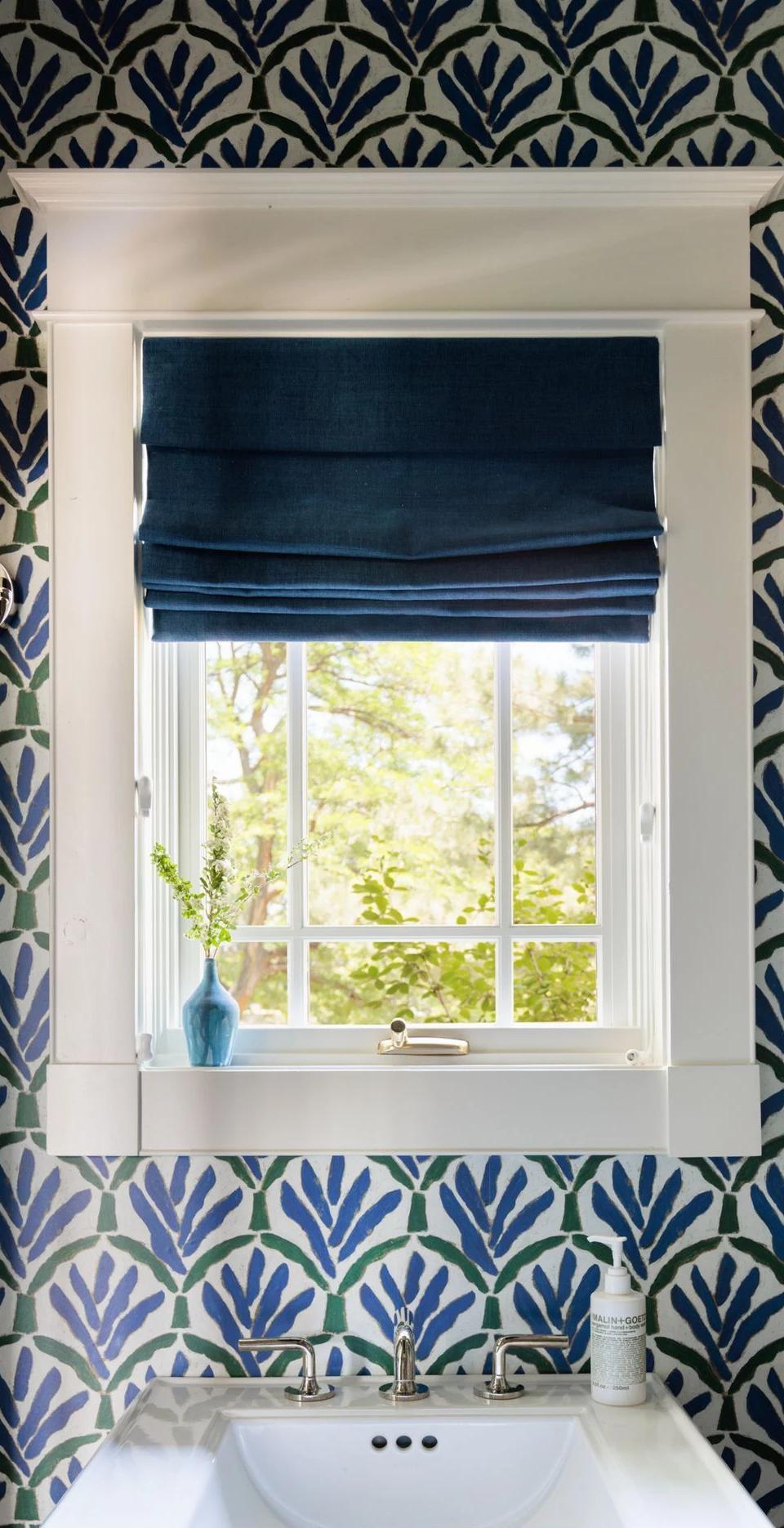
Bathroom. Privacy is the primary function here. A flat or relaxed roman shade in a moisture-resistant fabric provides coverage when needed and stacks neatly when you want natural light. For bathrooms with significant moisture exposure, a woven shade or a synthetic-blend fabric is a practical choice.
Bedroom. Blackout-lined roman shades are the go-to for bedrooms. A hobbled or relaxed style adds visual softness that complements bedding and upholstery, while the blackout lining ensures restful sleep. Layering the shade behind decorative drapery panels creates a rich, layered look.
Living Room. Roman shades in the living room often play a supporting role in a layered treatment or serve as the primary treatment on windows where drapery is not practical. Large picture windows, bay windows, and windows with limited wall space on either side are natural candidates for roman shades.
Home Office. Glare control matters in a workspace. A light-filtering roman shade reduces screen glare while maintaining ambient light. Motorized operation lets you adjust the shade throughout the day as the sun moves without leaving your desk.
Custom Roman Shades from Blinds Couture
Every roman shade from Blinds Couture is made to order. Your design consultant measures the window, discusses fabric options, recommends the appropriate style and lining, and presents a detailed proposal. The shade is fabricated to your exact specifications and professionally installed by our Colorado-based team.
The result is a window treatment that fits perfectly, performs beautifully, and reflects the design direction of your home with precision that off-the-shelf shades cannot approach.
Schedule Your Complimentary Design Consultation
Blinds Couture is Denver's premier custom window treatment studio, offering roman shades, drapery, roller shades, woven wood shades, shutters, and more. Every product is custom specified and professionally installed by our Colorado team.
Serving Denver since 1999
Blinds Couture Showroom
590 Quivas St
Denver, CO 80204
(720) 729-0091
Blinds Couture
Denver's premier custom window treatment studio
With over 25 years serving Colorado homeowners and designers, Blinds Couture brings expert knowledge in custom drapery, blinds, shades, shutters, and motorized window treatments. Our team combines design expertise with hands-on craftsmanship to create beautiful, functional spaces.
Learn more about our team