Blackout Bedroom Window Treatments in Denver: A Designer's Guide to Deep Sleep
Denver's thin-air sun and 5:20 AM summer sunrise demand real blackout, not room-darkening. Here is how our design team layers cellular shades, roller shades, and drapery for a hotel-grade sleep environment.
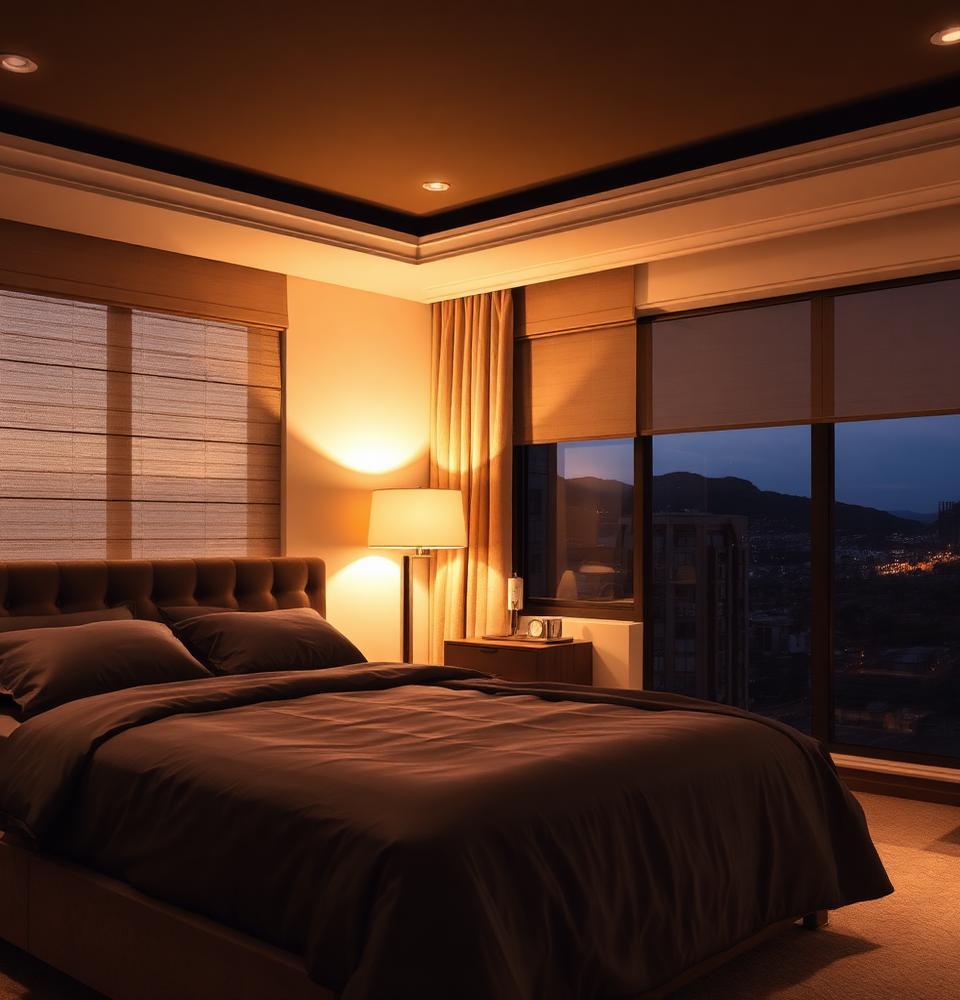
Denver bedrooms fight a specific problem. Our thin, high-altitude atmosphere lets more UV and direct sun through the glass than almost anywhere else in the country, and the sun is up before 5:30 AM in June. If your bedroom faces east or south, you are waking with the sun whether you want to or not. Real blackout window treatments are the difference between five hours of interrupted sleep and a genuinely dark, cool, quiet room.
This guide covers what actually blocks light in a Denver bedroom, why room-darkening is not the same as blackout, and how our design team layers cellular shades, roller shades, and custom drapery to deliver a hotel-grade sleep environment in homes across Cherry Creek, Highlands Ranch, Boulder, and beyond.
1. Blackout vs Room Darkening: The Difference Denver Sleepers Feel
Manufacturers use these terms loosely. Room-darkening fabric filters most light but still glows around the edges and through the weave. True blackout fabric has an opaque backing that stops light transmission through the material itself. In a Denver bedroom with a 5:20 AM sunrise, that difference is the difference between waking at dawn and sleeping until your alarm.
The fabric is only half the story. Light also leaks around the shade at the top, sides, and bottom. That halo of daylight is why an off-the-shelf blackout roller shade from a big-box store still lets your room turn gray by six in the morning. Custom-measured shades with side channels, valances, or paired drapery close those gaps.
What does true blackout require in practice? An opaque fabric, an inside or outside mount sized to seal the window opening, and often a second layer of drapery panels to catch any remaining spill. We measure to a sixteenth of an inch and build to eliminate the light gap, not just reduce it.
2. The Best Blackout Products for Denver Bedrooms
Three product families dominate our bedroom installs, and each solves a different problem.
Blackout cellular shades are our most-requested bedroom product. The honeycomb structure traps a layer of air between the fabric and the glass, which does two jobs at once: it kills the light and it adds real R-value to a room that would otherwise leak heat through single-pane or older double-pane windows. In a Denver winter, a bedroom with cellular blackout shades stays measurably warmer overnight. Look at our Hunter Douglas honeycomb collection for the deepest cell options.
Blackout roller shades are the cleanest, most modern look. A single fabric panel disappears into a slim cassette at the top of the window. When paired with a fabric-wrapped fascia and side channels, a blackout roller can eliminate 99% of ambient light. This is the go-to for contemporary bedrooms and short-throw walls where drapery would feel crowded.
Layered drapery over a blackout shade is the luxury solution. The shade handles the light. The drapery softens the room, absorbs sound, and gives you the styling flexibility Denver designers love. Explore fabric-and-hardware options in our custom drapery collection.
3. Why Does Denver Sun Feel So Much Brighter?
Elevation. At 5,280 feet, Denver receives roughly 25% more UV than a coastal city at the same latitude. That is not marketing copy. It is why your leather sofa fades faster here, why summer sunrise feels harsh instead of golden, and why a shade that works fine in Dallas can look washed out and thin in a Highlands Ranch primary suite.
The practical translation is that Denver bedrooms need denser fabric than the standard blackout spec you would order online. We select fabric weights based on window orientation, exposure, and the client's sleep schedule. A shift worker in Cherry Creek needs a different fabric than a retiree in Castle Rock who wants gentle morning light.
4. Motorization Changes Bedroom Design
Manual blackout shades work. Motorized ones change how you use the room. With motorized shades on a wall keypad, a bedtime scene lowers every shade in the room to a preset sleep position at 10 PM. A wake scene lifts them 30% at 6:45 AM so the room brightens gradually instead of jolting you.
Hunter Douglas PowerView is our most-installed system. It integrates with Apple Home, Google Home, and Alexa, runs on rechargeable batteries so there is no wiring, and it is quiet enough to run without waking a sleeping partner. For a deeper look at what motorization actually costs and how the batteries hold up in a Denver climate, see our motorized window treatment trends guide.
5. How Much Does a Blackout Bedroom Cost in Denver?
Pricing depends on window count, window size, product family, and whether you want manual or motorized. A single blackout cellular shade on a standard bedroom window runs $400 to $900. Motorization adds roughly $200 to $350 per shade. Layered drapery over a shade in a primary suite with two windows typically lands between $3,500 and $8,000 depending on fabric and hardware selection.
The math that matters is not sticker price. It is cost per year over the product's real service life. A custom blackout shade from our studio is built to last 15 to 20 years. A big-box blackout curtain lasts 2 to 3 seasons before the coating flakes and the light returns.
6. What About Skylights and Transom Windows?
Every Denver bedroom seems to have a small window nobody knew what to do with. Transoms above the bed, skylights over the primary bath, half-round or arched accent windows next to a fireplace. These are the light leaks that ruin an otherwise dark room.
Skylights get their own blackout cell shade, usually motorized because reaching them by hand is not realistic. Transoms and specialty shapes get custom-cut cellular shades that follow the window geometry. If you have a two-story primary suite with tall glass, we cover it in our companion guide on two-story window treatments in Denver.
7. Neighborhood Notes From Recent Bedroom Projects
In Cherry Creek, we are installing more motorized blackout roller shades in warm gray fabric layered with sheer linen drapery. The look reads modern without feeling cold.
In Highlands Ranch, primary suites with west-facing views of the foothills get blackout cellular shades under linen drapery panels. The cellular structure kills afternoon glare during summer, and the drapery panels stay open for the sunset.
In Boulder, we see a strong preference for natural fiber weaves layered over blackout liners. Clients want the texture of a woven wood shade but still need the room to go dark.
Ready for a Bedroom That Actually Sleeps Dark?
A blackout bedroom is not a single product. It is a layered system built to the window, the exposure, and the way you actually use the room. Our design team walks every window before we recommend fabric or hardware, and the in-home consultation is complimentary.
Book a design consultation and we will bring the fabric library, the blackout samples, and 25 years of Denver bedroom experience to your home.
Serving Denver since 1999
Blinds Couture Showroom
590 Quivas St
Denver, CO 80204
(720) 729-0091

Blinds Couture
Denver's premier custom window treatment studio
With over 25 years serving Colorado homeowners and designers, Blinds Couture brings expert knowledge in custom drapery, blinds, shades, shutters, and motorized window treatments. Our team combines design expertise with hands-on craftsmanship to create beautiful, functional spaces.
Learn more about our team