Blinds or Shades: Choosing Window Treatments for your Home
Blinds & shades are great features for your home interiors. Need help in choosing window treatments for your home? Contact Blinds Couture for consultation.
Updated October 5, 2026
Blinds or Shades: Choosing Window Treatments for Your Home
It is the most common question Blinds Couture's design team hears during initial consultations. "Should I go with blinds or shades?" The question sounds simple, but it opens a conversation that touches on light control, design style, room function, energy efficiency, maintenance, and personal preference. Blinds and shades are fundamentally different products, and understanding what each one does well is the fastest path to a decision you will be happy with for years.
The short answer is that neither product is universally better. Blinds excel in some situations. Shades excel in others. Many homes use both, deploying each product where its strengths matter most. This guide breaks down the differences so you can make confident decisions room by room.
What Blinds Are
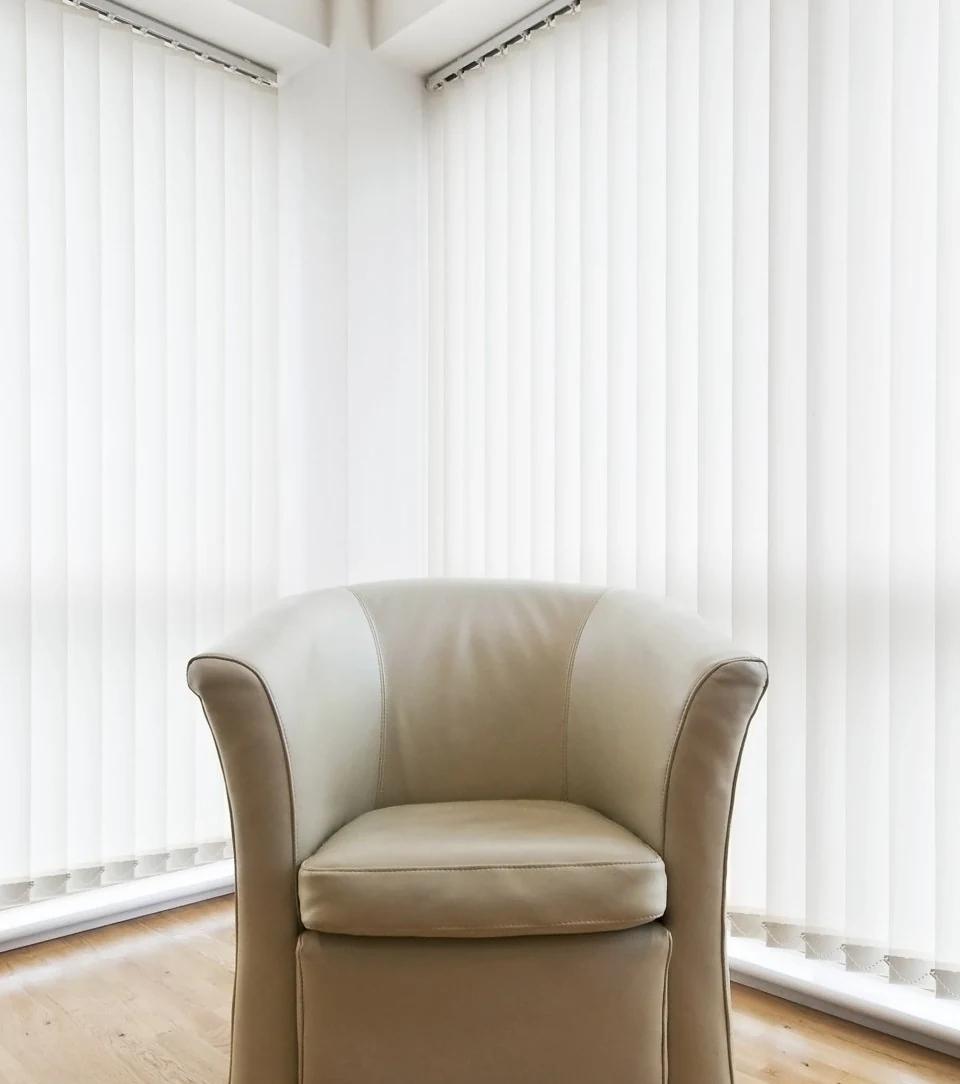
Blinds are composed of individual slats, typically horizontal but sometimes vertical, that tilt to control the angle of incoming light. When you want light, you tilt the slats open. When you want privacy, you tilt them closed. When you want the window completely clear, you raise the entire blind (horizontal) or draw it to one side (vertical).
The slat structure gives blinds a level of light precision that shades cannot match. You can direct light upward toward the ceiling, downward toward the floor, or anywhere in between. You can allow a sliver of light between each slat while maintaining privacy, or you can close the slats tight for near-complete light blockage.
Blind materials include real hardwood, faux wood (PVC or composite), aluminum, and vinyl. Each material has a distinct look and a different set of practical advantages. Real wood brings warmth and natural grain. Faux wood delivers moisture resistance for bathrooms and kitchens. Aluminum provides a slim, modern profile.
What Shades Are
Shades are fabric-based window treatments that cover the window as a single continuous panel or structured textile layer. They raise and lower as a unit rather than tilting individual slats. The fabric determines everything about how the shade performs: how much light it transmits, how much insulation it provides, how it looks, and how it contributes to the room's design.
The shade category is remarkably broad. It includes roller shades, roman shades, cellular (honeycomb) shades, woven wood shades, solar shades, and pleated shades. Each subcategory has its own characteristics, and the range of fabrics, opacities, and operating systems within each subcategory creates almost unlimited customization.
Shades offer softer visual warmth than blinds. Where blinds are architectural and structured, shades are textile and flowing. A roman shade in linen, a woven wood shade in bamboo, or a roller shade in a textured neutral introduces fabric warmth to a room in ways that hard slats cannot replicate.
Light Control: Precision vs. Range
Blinds offer more precise, adjustable light control in real time. The tilting slat mechanism lets you fine-tune light entry throughout the day without raising or lowering the entire treatment. For a home office where glare shifts as the sun moves, or a kitchen where you want morning light but afternoon shade, blinds provide granular, in-the-moment adjustment.
Shades offer a broader range of light control through fabric selection. The same shade can be specified in sheer, light-filtering, room-darkening, or blackout fabric. A blackout cellular shade eliminates more light than even fully closed blinds, because there are no gaps between slats. A sheer roller shade filters light more evenly and softly than blinds with tilted slats.
The distinction comes down to whether you want adjustable control during the day (blinds) or the right level of light set by your fabric choice (shades).
Insulation and Energy Efficiency
Shades hold a clear advantage for energy efficiency. Cellular shades, with their honeycomb construction, are the most insulating window treatment available. The air trapped inside the cells acts as a thermal barrier between the window and the room interior. Single-cell, double-cell, and triple-cell configurations provide increasing levels of insulation.
In Colorado homes, where heating and cooling costs are driven by extreme temperature variation, cellular shades make a measurable difference in energy consumption. On large window walls and in older homes with single-pane or dated double-pane glass, the thermal improvement from cellular shades is significant enough that some homeowners can feel the temperature difference by holding a hand near the window.
Roman shades with thermal lining and blackout-lined drapery also provide meaningful insulation. Roller shades offer moderate insulation depending on fabric density.
Blinds provide minimal insulation. The gaps between slats allow air movement, and the hard surface of the slat material does not create a meaningful thermal barrier. Blinds with closed slats reduce some heat transfer through the window, but they are not competitive with fabric-based treatments for energy efficiency.
For a deeper look at how window treatments affect home value and energy performance, see our article: Do Custom Window Treatments Add Value for Your Home?.
Privacy
Both products provide excellent privacy, but the mechanism differs. Blinds provide adjustable privacy. You can tilt the slats to block sightlines at eye level while leaving gaps at the top for light and sky views. You can close them fully for complete privacy. Vertical blinds serve this function on sliding glass doors and wide window walls.
Shades provide fixed privacy based on fabric opacity. A light-filtering shade provides daytime privacy but allows silhouettes to be visible from outside at night. A room-darkening or blackout shade provides complete privacy at all times when lowered. Top-down/bottom-up shades allow you to lower the shade from the top to let light in while keeping the lower portion covered for privacy.
For rooms where privacy needs change throughout the day (home offices, kitchens), blinds offer more flexibility. For rooms where privacy is binary, either needed or not (bedrooms, bathrooms), shades with the appropriate opacity deliver a cleaner solution.
Aesthetics and Design Compatibility
This is where personal preference and design direction take over. Blinds have a structured, linear quality. They read as architectural elements within the window frame. Real wood blinds add warmth to traditional and transitional spaces. Aluminum blinds suit modern and industrial interiors.
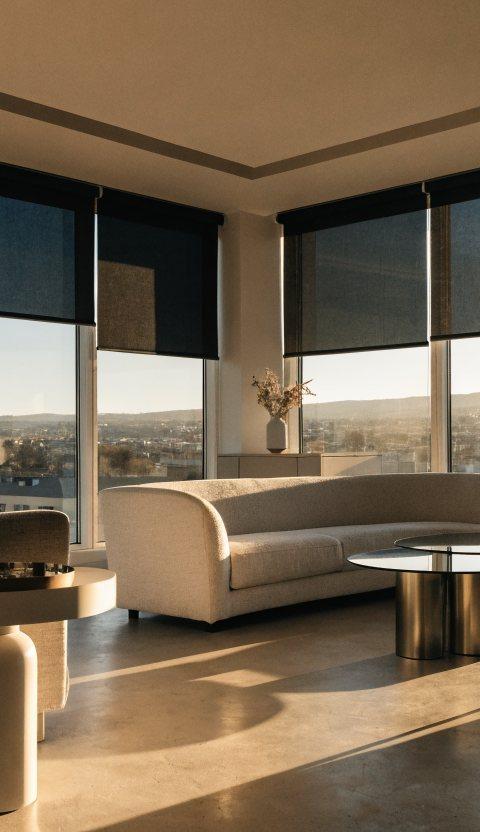
Shades have a softer, more textile-driven presence. They introduce fabric, pattern, and texture into a space. Roman shades feel like small pieces of upholstery. Woven wood shades bring organic, natural-fiber character. Roller shades deliver clean minimalism. Cellular shades offer a crisp, honeycomb texture.
In Denver's current design landscape, shades dominate residential installations because the market trends toward warm minimalism, organic modernism, and transitional styles that favor fabric and texture. Blinds remain strong in home offices, children's rooms, kitchens, and bathrooms where practicality and adjustability are priorities.
Maintenance
Blinds require more maintenance than shades. Dust collects on individual slats and must be wiped or vacuumed regularly. In Denver's dusty, dry climate, this accumulation is noticeable. Kitchens near cooking surfaces add grease to the dust equation. Cleaning wooden blinds with slat-by-slat wiping is a real time commitment.
Shades are generally lower maintenance. Roller shades and cellular shades can be dusted with a light vacuuming attachment or a microfiber cloth. Roman shades may require occasional spot cleaning or professional cleaning depending on the fabric. Woven wood shades need periodic dusting but do not accumulate grime the way slatted blinds do.
Cost Comparison
Blinds and shades occupy overlapping price ranges. Basic faux wood blinds are among the most affordable custom window treatments available. Premium hardwood blinds with motorized tilt mechanisms move into the mid-range. Custom roman shades, cellular shades, and motorized roller shades range from mid to premium pricing depending on fabric, size, and operating system.
The cost of a specific product depends on the window dimensions, the material or fabric selected, the operating system (manual, spring-assisted, motorized), the lining (for shades), and the mounting method. Your Blinds Couture design consultant provides a detailed, transparent proposal for every window so you can compare options and make informed decisions.
The Room-by-Room Recommendation
Bedrooms: Shades (blackout cellular or blackout roman shades for maximum darkness and insulation)
Living rooms and great rooms: Shades (solar shades, light-filtering roller shades, or roman shades for warmth and design versatility)
Kitchens: Either product works. Blinds (faux wood) for adjustable light and easy wipe-down. Shades (roman or roller in performance fabric) for cleaner aesthetics.
Bathrooms: Blinds (faux wood for moisture resistance) or shades (top-down/bottom-up cellular for privacy and light control)
Home offices: Blinds (for real-time glare adjustment) or solar shades (for glare reduction with view preservation)
Dining rooms: Shades (roman shades or layered with drapery for visual richness)
Children's rooms: Either product, cordless operation mandatory. Cellular blackout shades are the most popular choice for safety, darkness, and insulation.
For a full overview of all window treatment categories and how they fit into different design styles, see our comprehensive guide: The Ultimate Guide to Window Treatments.
Let Your Design Consultant Help You Decide
The best decision is an informed one, and the most efficient way to get informed is to walk through your home with a professional who knows these products intimately. Blinds Couture's complimentary in-home consultation evaluates every window, considers every factor, and presents clear recommendations with transparent pricing.
Some rooms will call for blinds. Some will call for shades. Some will surprise you with a combination you had not considered. The goal is a home where every window has exactly the right treatment for the room it serves.
Schedule Your Complimentary Consultation
Blinds Couture is Denver's premier custom window treatment studio, offering blinds, shades, drapery, shutters, and specialty treatments from Hunter Douglas, Graber, Norman, Alta, and other premium manufacturers.
Serving Denver since 1999
Blinds Couture Showroom
590 Quivas St
Denver, CO 80204
(720) 729-0091

Blinds Couture
Denver's premier custom window treatment studio
With over 25 years serving Colorado homeowners and designers, Blinds Couture brings expert knowledge in custom drapery, blinds, shades, shutters, and motorized window treatments. Our team combines design expertise with hands-on craftsmanship to create beautiful, functional spaces.
Learn more about our team