Denver Wildfire Smoke Season 2026: Window Treatments That Help Keep Indoor Air Cleaner
Colorado's July smoke days are back. Here is how the right cellular shades, drapery, and motorization help Denver homes seal out haze and hold in conditioned air.

The first weekend of July 2026 landed with the same headline Front Range families have learned to expect. Red flag warnings northwest of Fort Collins. A brown line drifting east across I-25. AQI readings climbing past 150 in Wash Park and the Highlands before lunch. Every summer this decade, our design phone starts ringing the day the smoke arrives, and the question is almost always the same. What can I put on my windows that actually helps.
Window treatments are not an air purifier. We say that in every consultation. What they can do, and do well when they are specified and installed correctly, is reduce the volume of unfiltered outside air pulled through leaky window frames, keep radiant heat from cooking a west-facing great room while the HVAC recirculates, and give you a clean way to darken a bedroom on a smoke-hazed morning so kids can still sleep. Here is what our team is specifying most in July 2026, and why.
1. Honeycomb cellular shades on the rooms you live in
If you buy one product this smoke season, buy honeycomb shades. The double-cell and triple-cell constructions from Hunter Douglas Duette and Alta trap a pocket of still air against the glass, which slows the convective loop that pulls conditioned air out and unfiltered air in through the frame gaps every window has. On a leaky 1970s Southmoor picture window we measured last August, adding a double-cell cellular shade cut the surface temperature swing by nine degrees and noticeably reduced the perceived smoke smell in the room within an hour of closing.
Specify a top-down bottom-up lift so you can leave the top half closed for privacy and light control while venting the bottom for a view of the yard. In smoke-heavy weeks, run them fully closed on the west and south exposures from about eleven in the morning until sunset.
2. Layered drapery on the great room and primary bedroom
The rooms that show smoke fatigue first are the ones with the largest single panes of glass. Great rooms, primary bedrooms, and two-story stairwells. Layering custom drapery over a functional shade adds a second still-air pocket, absorbs sound bouncing off hard summer surfaces, and gives you a soft close at night that a shade alone cannot deliver.
Our July drapery orders skew heavily toward performance-lined panels in linen and linen blends. The interlining does the heavy lifting for insulation. The face fabric handles the look. Motorized tracks on the primary bedroom let you close everything from bed at eleven pm without touching a wand.
3. Solar screens for the west wall
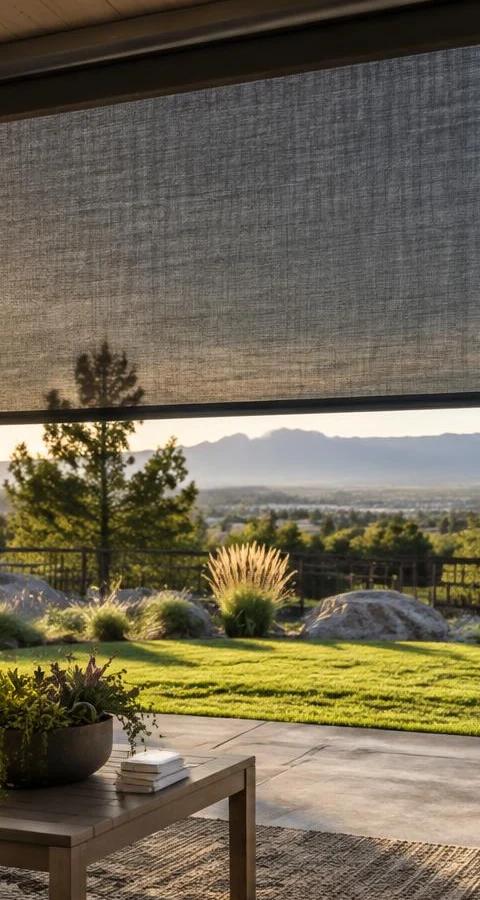
West-facing Denver windows take a beating from June through September. On smoke days, the diffused low-angle sun still delivers plenty of UV and infrared even when the sky looks flat. A dedicated solar shades layer, either mounted inside the frame behind a decorative treatment or as an exterior roller on newer construction, blocks between 80 and 95 percent of incoming solar radiation depending on the openness factor you choose.
We are specifying five percent openness for west-facing living rooms this summer. It keeps a soft view of the mountains, kills the glare on your television, and lowers the surface temperature of your leather sofa by a measurable amount.
4. Motorization is the smoke-day feature nobody knew they needed
The single feature request we have added the most in the last twelve months is scenes. Not motorization for its own sake. Scenes. A PowerView Gen 3 hub tied to a smoke-day scene closes every solar shade, cellular shade, and drapery track on the west and south exposures at eleven am and reopens them at seven pm. You do not have to remember. You do not have to walk the house. A voice prompt to Alexa or a single tap on the app runs the sequence in about fifteen seconds.
For clients who leave for the mountains on weekends and come home to a house that has been baking in July haze, this one feature has changed how they feel about summer in Denver. Ask about it during your design consultation.
5. Plantation shutters where you want a permanent solution
Some clients do not want to think about opening and closing anything. For those homes, plantation shutters on the front-facing rooms give you a permanent, tuneable louver you can angle down against low July sun in the morning, flat for airflow in the evening, and fully closed on a smoke-heavy afternoon. Poly composite louvers hold up to Denver's dry heat cycling better than paint-grade wood for south and west exposures.
Where to start
The right combination depends on your exposures, your ceiling heights, and how you actually live in the room. That is what our in-home consultation is for. We measure your glass, look at your HVAC returns, and put together a written specification that layers cellular shades, drapery, and motorization where each will do the most good. If your July mornings have already been rough, this is a good week to book.
Serving Denver since 1999
Blinds Couture Showroom
590 Quivas St
Denver, CO 80204
(720) 729-0091

Blinds Couture
Denver's premier custom window treatment studio
With over 25 years serving Colorado homeowners and designers, Blinds Couture brings expert knowledge in custom drapery, blinds, shades, shutters, and motorized window treatments. Our team combines design expertise with hands-on craftsmanship to create beautiful, functional spaces.
Learn more about our team