Window Treatment Trends to Try Out
To help you get started, here are some fashionable window treatment ideas that you can use for your much-needed window décor upgrade.
Updated October 5, 2026
Window Treatment Trends to Try Out
Window treatment design moves slowly compared to fashion or technology, and that is a strength. The best trends in this space are not fleeting. They reflect deeper shifts in how people live, how homes are designed, and what homeowners value in their daily environment. The treatments that are gaining momentum right now will not feel dated in five years. They represent a maturation of residential design toward warmth, authenticity, performance, and simplicity.
Here is what Blinds Couture's design team is seeing across Denver's luxury residential market and what these trends mean for your next project.
Warm Minimalism: Less Product, More Presence
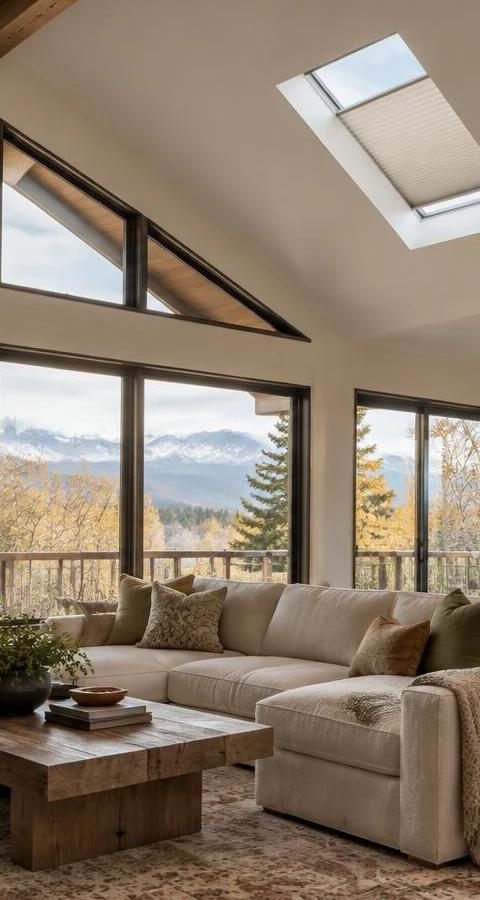
The dominant design direction across Denver's new construction and renovation market is warm minimalism. Clean lines, natural materials, muted palettes, and intentional restraint. In window treatment terms, this translates to treatments that feel substantial but not heavy, refined but not ornate, and visible but not competing with the architecture.
The warm minimalism window looks like this: a single treatment, executed perfectly, in a natural or neutral fabric. No valance. No layering unless function demands it. No visible hardware if the track can be concealed. The drapery or shade becomes a quiet extension of the wall, adding warmth and texture without announcing itself.
Linen is the signature fabric of this trend. Euro pleat and ripple fold drapery are the signature headers. Motorized operation on a concealed track is the signature installation. The result is a window that feels effortless, but every element was chosen with care.
Organic Textures and Natural Fibers
The movement toward natural materials is accelerating. Homeowners want to feel the source of the material in their window treatment, whether it is the slub of raw linen, the irregularity of a hand-woven jute shade, or the tonal variation of bamboo. Synthetic perfection is giving way to organic authenticity.
Woven wood shades are experiencing their strongest demand in years. The material's natural texture, its ability to filter light in shifting, dappled patterns, and its connection to the outdoors resonate deeply with Denver homeowners who chose Colorado for its landscape and want their interiors to reflect that connection.
Boucle, grasscloth, and herringbone weaves are appearing in roman shades and drapery panels. These textures carry visual weight without relying on bold color or pattern, which makes them versatile enough to work in any room and timeless enough to outlast trend cycles.
Floor-to-Ceiling Everything
The ceiling-mounted installation is no longer a design-forward choice. It is the standard expectation among Denver's design-conscious homeowners. Mounting drapery and shades at the ceiling line rather than at the window frame transforms the perceived height of the room, the proportions of the wall, and the visual weight of the treatment.
This trend has practical implications. It requires taller panels, more fabric yardage, and installation hardware rated for the extended height. It also requires more precise measurement because any deviation from plumb is visible over the full length of the panel. Professional installation is essential.
The payoff is dramatic. A 9-foot ceiling with ceiling-mounted drapery feels like 10 feet. A 10-foot ceiling feels like a loft. The room opens up vertically in a way that eye-level-mounted treatments cannot achieve.
Motorization as Baseline
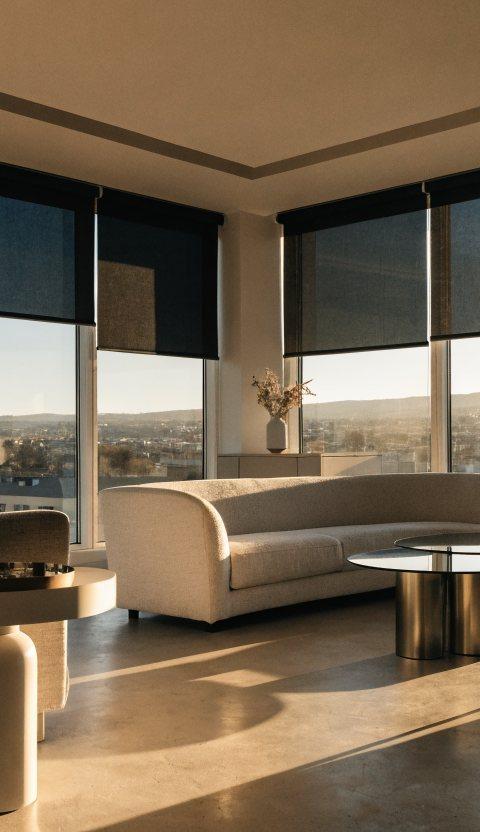
Motorized window treatments have crossed the threshold from luxury upgrade to expected feature. In new construction and major renovation projects across Denver, motorized shades and drapery are specified as the default, not the add-on.
Several forces drive this shift. The June 2024 cordless mandate made corded treatments obsolete. Smart-home adoption is accelerating, and window treatments are one of the easiest and most impactful systems to automate. Battery technology has improved to the point where rechargeable motorized shades last 6 to 12 months between charges. And the user experience of controlling shades by voice, app, or schedule is simply better than manual operation.
For homeowners building or renovating in Denver, the question is no longer "should we motorize?" It is "which motorization platform integrates best with our home system?" Lutron, Hunter Douglas PowerView, and Control4 are the leading options, each with different strengths in integration, reliability, and ecosystem compatibility.
Dual Roller Systems for Versatility
The dual roller shade is one of the most practical innovations in recent years, and it is gaining rapid adoption in Denver bedrooms and multipurpose rooms. Two shades on a single headrail: a solar or light-filtering shade in front for daytime use, and a blackout shade behind for nighttime darkness. Each operates independently. The combined profile is remarkably slim.
This system eliminates the need for layered drapery in rooms where a minimal aesthetic is preferred. It provides the full range of light control, from fully open to partially filtered to completely dark, in a single, clean installation. For primary bedrooms with significant sun exposure, the dual roller is becoming the default specification.
Bold Color in Small Doses
While the dominant palette remains neutral, bold color is re-emerging as an accent strategy in window treatment design. A single set of drapery panels in a saturated green, navy, or terracotta makes a statement in a dining room or library without overwhelming the room. The key is restraint: one room, one bold treatment, surrounded by neutral tones that let the color breathe.
This trend aligns with broader interior design's return to color after several years of all-neutral interiors. Window treatments are an ideal vehicle for introducing color because they are large enough to make an impact but impermanent enough to change when your taste evolves. A bold drapery panel is a fraction of the commitment of a painted wall or a tiled surface.
Sustainability as a Design Value
Environmental consciousness is influencing window treatment selection among Denver homeowners, particularly in the $1M+ residential market. Clients are asking about fabric sourcing, manufacturing practices, and end-of-life recyclability. They want natural fibers, energy-efficient products, and brands that demonstrate genuine commitment to sustainability.
Woven wood shades, organic linen drapery, and cellular shades with recycled content are the products that align most naturally with this value. Motorized treatments on smart-home automation contribute operational sustainability by optimizing energy use season over season.
This is not a passing trend. It reflects a permanent shift in consumer values that will continue to influence product development and specification for years.
Making Trends Work for Your Home
The best approach to trends is selective adoption. Choose the ones that align with your design sensibility and your home's architectural character, and ignore the rest. Trends should inform your decisions, not dictate them. A linen drapery on a concealed track is both on-trend and timeless. A bold accent color in the dining room is both current and personal. Motorization is both fashionable and genuinely useful.
Blinds Couture's design team stays current with every development in the window treatment market so you do not have to. Your consultation includes honest guidance on which trends are worth investing in and which are better left to magazine spreads.
For a complete overview of all window treatment types, see our guide: The Ultimate Guide to Window Treatments.
Book Your Complimentary Design Consultation
Blinds Couture is Denver's premier custom window treatment studio, keeping Colorado homeowners ahead of the curve with the latest in design, materials, and technology.
Serving Denver since 1999
Blinds Couture Showroom
590 Quivas St
Denver, CO 80204
(720) 729-0091
Blinds Couture
Denver's premier custom window treatment studio
With over 25 years serving Colorado homeowners and designers, Blinds Couture brings expert knowledge in custom drapery, blinds, shades, shutters, and motorized window treatments. Our team combines design expertise with hands-on craftsmanship to create beautiful, functional spaces.
Learn more about our team