Style your Home Like a Pro with Custom Window Drapes
Be a window stylist, follow these 8 guidelines in adding custom window drapes for your home. Call Blinds Couture today for a complimentary consultation.
Updated October 5, 2026
Style Your Home Like a Pro with Custom Window Drapes
Interior designers see windows differently than most homeowners. Where you see an opening in the wall, a designer sees an opportunity to reshape the entire room. The height of the ceiling, the proportion of the walls, the quality of natural light, the way the space flows from one area to the next: all of it can be influenced, even transformed, by how you dress the window.
Custom window drapes are the single most impactful tool designers use to elevate a room from well-furnished to truly finished. The good news is that the principles behind their decisions are learnable. You do not need a design degree to style drapes beautifully. You need the right guidelines and a partner who understands the craft.
These eight principles are the same ones Denver's top interior designers follow when specifying custom drapery for their clients. At Blinds Couture, we apply these principles to every project we touch.
For a full overview of drapery styles, fabrics, and the custom process, visit our comprehensive guide: The Complete Guide to Choosing Elegant Custom Drapery with Blinds Couture.
1. Mount High, Hang Wide
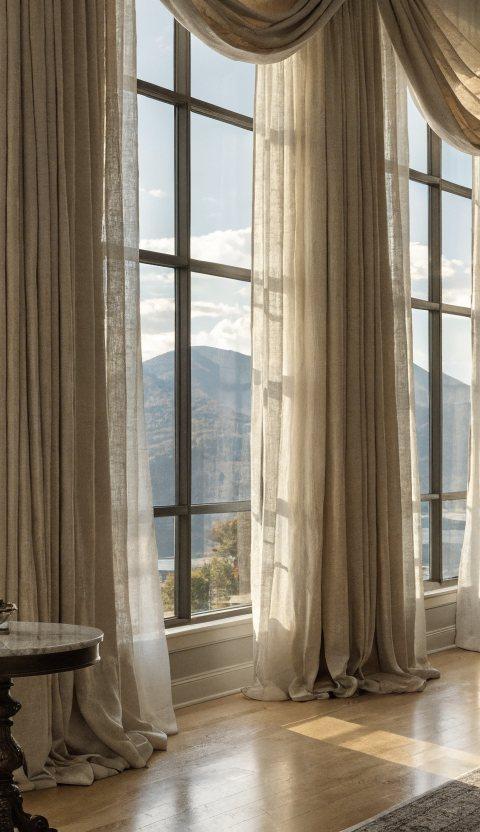
This is the most transformative single decision in drapery styling. The rod should be mounted as close to the ceiling as possible, not at the top of the window frame. This draws the eye upward and makes the ceiling feel taller. In rooms with standard 8- or 9-foot ceilings, this technique adds visual height that the room desperately needs. In rooms with 10-foot or vaulted ceilings, it emphasizes the architectural drama.
The rod should also extend beyond the window frame on both sides, typically 6 to 12 inches depending on the window width and the wall space available. This accomplishes two things. First, when the panels are drawn open, they stack against the wall rather than covering the glass, which lets maximum light into the room. Second, it makes the window appear wider than it actually is, which creates a more generous, balanced proportion.
The combination of high mounting and wide extension is the single most common technique professional designers use. It costs nothing extra. It requires no additional fabric. It simply requires knowing where to place the brackets.
2. Let Panels Kiss the Floor
Custom drapery should touch the floor. Not hover two inches above it. Not puddle in a pool of excess fabric (unless that is the intentional design choice). The hem should just barely break at the floor line, creating a clean, tailored finish.
Hovering panels look like they were cut wrong. It reads as a mistake, even when it was done intentionally to avoid dragging. The eye wants to see the fabric complete its line from ceiling to floor without interruption.
A slight puddle of one to two inches of excess fabric creates a more romantic, relaxed look. This works beautifully with linen and silk in formal or bohemian-inspired spaces. A full puddle of six or more inches is a dramatic choice reserved for formal dining rooms, master suites, and rooms where the drapery is meant to make a grand statement.
For practical households with children, pets, or robotic vacuums, the clean break at floor level is the most versatile and low-maintenance option. Your Blinds Couture installer measures to the exact fraction of an inch to achieve this.
3. Choose Fullness That Matches the Mood
Fullness refers to how much fabric is used relative to the width of the window. Standard fullness is 2x, meaning the total fabric width is twice the width of the window or rod. This creates rich, generous folds that look appropriately luxurious for most residential settings.
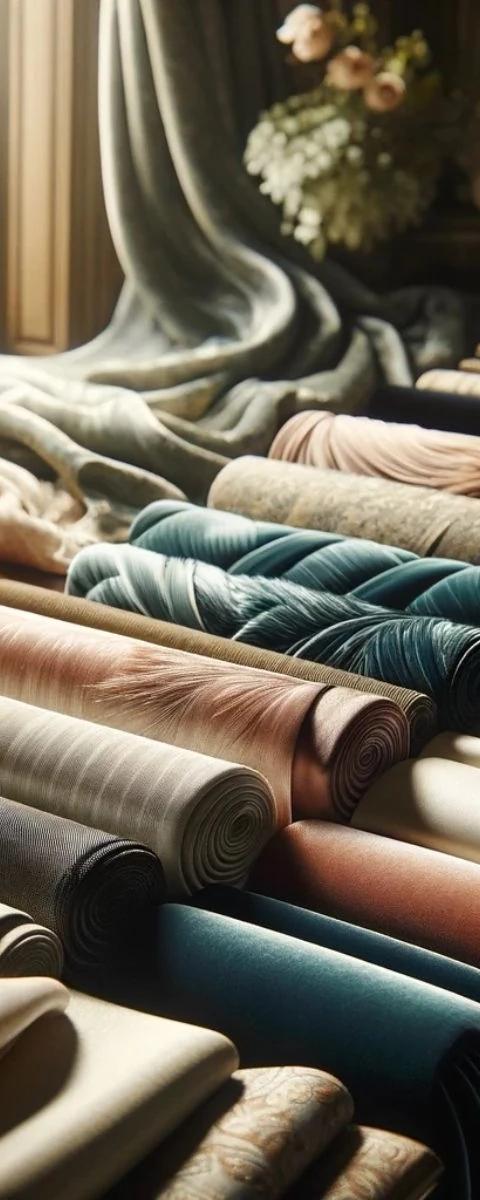
For a more relaxed, organic look (common in linen and casual cotton panels), 1.5x fullness delivers a softer, less structured appearance. For ultra-formal settings with silk or velvet, 2.5x or even 3x fullness creates the kind of opulent, deeply folded panels you see in high-end hotels and estate homes.
Skimping on fullness is the most common mistake in off-the-shelf curtains. Two flat, skinny panels flanking a window look like an afterthought. Custom drapery is designed with the appropriate fullness built into the fabrication, so the finished treatment looks intentional and complete.
4. Layer Treatments for Function and Beauty
The most sophisticated window designs use more than one layer. This is where professional styling separates itself from DIY decorating. Layering allows each treatment to handle a specific job while contributing to the overall visual composition.
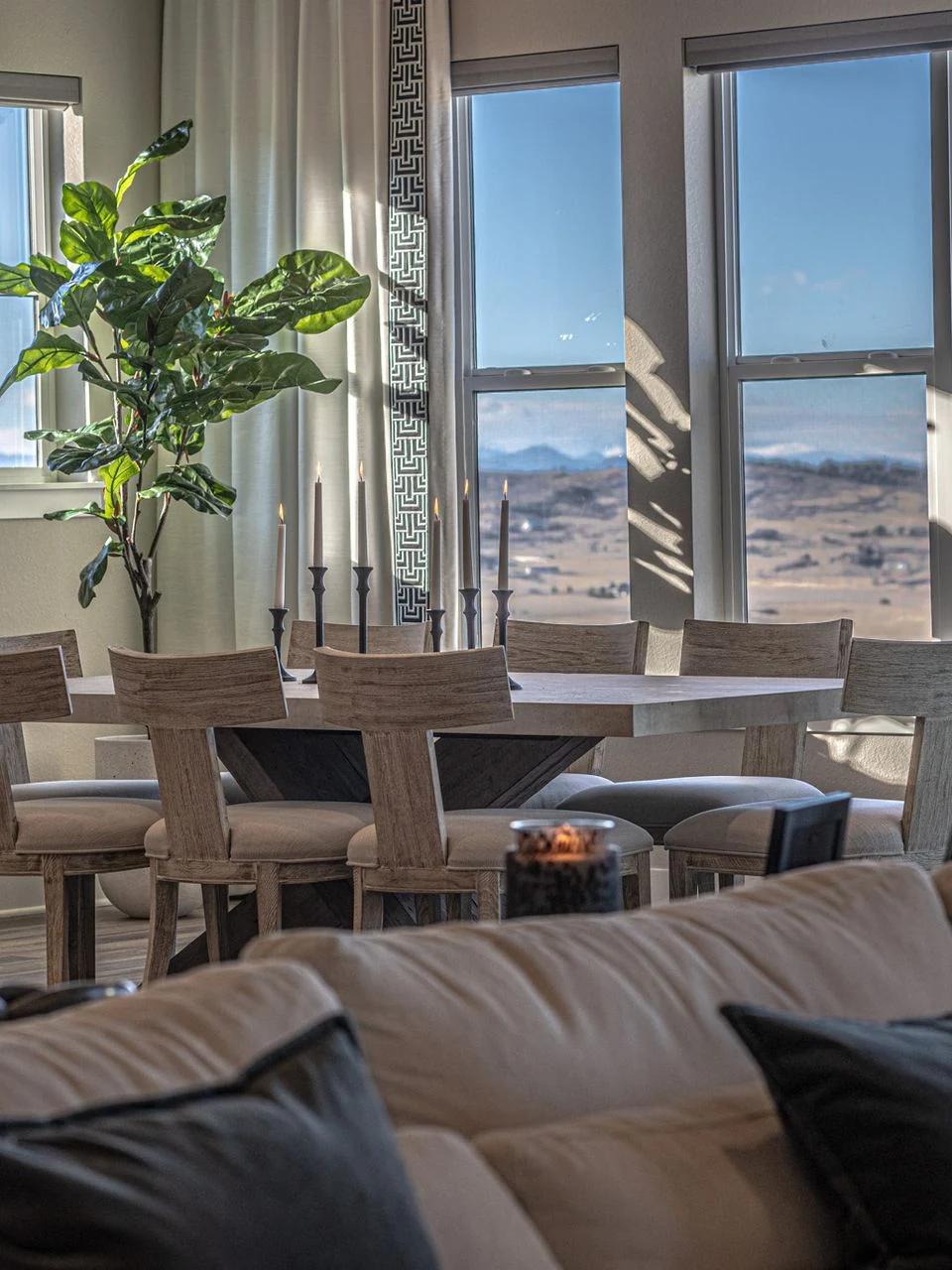
A common layered approach in Denver homes pairs decorative drapery panels with a functional shade behind them. The drapery provides beauty, framing, and softness. The shade handles light control, privacy, and insulation. During the day, the shade is raised and the drapery panels are drawn open, letting light flood the room. In the evening, the shade lowers for privacy while the drapery frames the window beautifully from both sides.
Popular layering combinations include pinch pleat drapery over motorized roller shades for primary bedrooms, sheer drapery panels over woven wood shades for living rooms, and structured Euro pleat panels over blackout Roman shades for nurseries and media rooms.
For a deeper look at fabric choices that work well in layered configurations, see our guide: Fabric First: How to Choose Elegant Draperies for Luxurious Window Treatments.
5. Coordinate Hardware with the Room's Metal Story
Every room has a metal story. The finish on the light fixtures, the cabinet pulls, the furniture legs, the mirror frames: all of these elements share a metallic language. Your drapery hardware should speak that same language.
If the room features warm metals like brass, aged gold, or copper, the drapery rod and rings should follow suit. If the room leans toward cool metals like polished nickel, chrome, or matte silver, the hardware should match. Matte black is the one universally compatible finish that works across warm and cool palettes. It reads as architectural rather than metallic, which gives it unusual versatility.
Mismatched metals are not inherently wrong. Intentional mixing is a design choice that can add visual interest. But unintentional mixing, where the hardware clearly does not relate to anything else in the room, creates a disjointed feeling that undermines the design.
Your Blinds Couture design associate brings hardware samples during the consultation so you can see them against your room's existing finishes. This eliminates guesswork and ensures the finished treatment feels cohesive.
6. Use Drapery to Solve Architectural Problems
Not every window is perfectly proportioned. Not every wall is the right height. Not every room is symmetrical. Custom drapery is one of the most effective tools for correcting what the architecture got wrong.
A window that feels too short can be visually extended by mounting the rod above the frame and choosing floor-length panels. A window that feels too narrow can be widened by extending the rod far beyond the frame on each side. Two small windows on the same wall can be unified by running a single long rod across both, with a shared pair of panels that makes them read as one large window.
An off-center window can be balanced by adjusting the rod extension so the panels create visual symmetry even though the window itself is not centered on the wall. Awkward ceiling transitions, angled walls, and alcove windows all have drapery solutions. The key is working with a team that sees these challenges as design opportunities rather than limitations.
7. Consider the View from Outside
This is the detail most homeowners never think about, but professionals always do. From the street, your windows are part of your home's facade. A row of windows with mismatched treatments, some with white linings, some with colored linings, some with no treatment at all, creates a disorganized exterior appearance.
Consistent lining color (typically white or off-white) across all exterior-facing windows unifies the home's appearance from the outside. This is especially important in communities with HOA requirements or in neighborhoods where curb appeal contributes to property value.
Blinds Couture specifies uniform lining color as a standard practice for every project. It is a small detail that makes a significant difference in how your home presents itself to the world.
8. Train Your Panels After Installation
Training is the final step that separates professional installation from a DIY hang-it-and-leave-it approach. After custom drapery panels are installed, the fabric needs to be steamed and hand-dressed into the correct fold pattern. Each pleat is shaped, the folds are smoothed and aligned, and the panels are tied back with soft cotton strips for 48 to 72 hours.
This training period allows the fabric to develop memory. When the ties are removed, the panels fall naturally into the fold pattern they were trained to hold. Without training, even the most beautiful panels will hang unevenly and refuse to stack properly when drawn open.
Every Blinds Couture installation includes professional panel training. It is part of the white-glove service that ensures your drapery looks exactly as it should from the very first day.
Bringing It All Together
Styling custom drapes like a professional is not about following rigid rules. It is about understanding the principles that create visual harmony, then applying them to the specific conditions of your home. The height of your ceilings, the width of your windows, the weight of your fabric, the function of the room, and the mood you want to create all inform the decisions.
Blinds Couture's design team lives in these details every day. From the first consultation to the final steaming, every choice is made with the goal of creating window treatments that feel like they belong in your home as naturally as the walls themselves.
Book Your Complimentary Design Consultation
Blinds Couture is Denver's premier custom window treatment studio. From design consultation to fabrication to installation, every step of your project is handled by our Colorado-based team.
Serving Denver since 1999
Blinds Couture Showroom
590 Quivas St
Denver, CO 80204
(720) 729-0091

Blinds Couture
Denver's premier custom window treatment studio
With over 25 years serving Colorado homeowners and designers, Blinds Couture brings expert knowledge in custom drapery, blinds, shades, shutters, and motorized window treatments. Our team combines design expertise with hands-on craftsmanship to create beautiful, functional spaces.
Learn more about our team