The Denver Homeowner's Guide to Plantation Shutters | Blinds Couture
A complete guide to choosing plantation shutters for Colorado homes: materials, louver sizes, frame styles, and how shutters perform against Denver sun, dry air, and altitude.
Updated October 5, 2026
The Denver Homeowner's Guide to Plantation Shutters
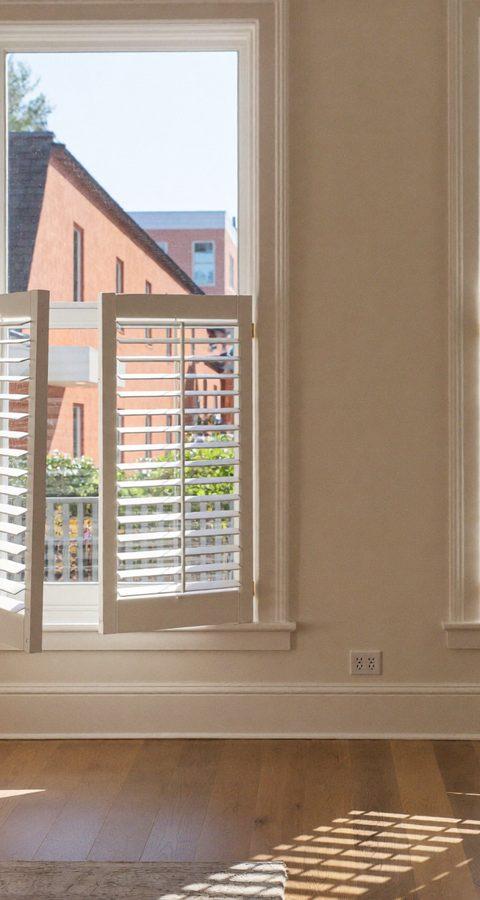
Plantation shutters are the only window treatment that becomes part of the architecture of a home. Unlike drapery or shades, which dress a window, shutters are built into the frame. They add permanent value, last for decades, and carry a quiet sense of craftsmanship that few other treatments can match. For Denver homeowners weighing whether shutters are the right investment, this guide walks through every decision: material, louver size, frame style, finish, and how plantation shutters actually perform in Colorado's high-altitude, low-humidity climate.
For the full range of styles Blinds Couture installs across the Front Range, visit our plantation shutters collection. To see how shutters layer with other treatments in real Denver homes, browse our project gallery.
Why Shutters, and Why Now
Shutters do three things almost no other treatment does. They add resale value because they are considered a permanent architectural upgrade. They control light with a precision that fabric treatments cannot match, tilting from fully open to fully closed in fine increments. And they age beautifully. A well-built shutter installed today will look as intentional in twenty years as it does on the day it is hung.
For Denver homes, shutters also solve a climate problem. Our intense UV exposure fades fabrics quickly. Shutters made from quality hardwood or engineered composite materials are virtually immune to UV degradation. They are also unaffected by the dry indoor air that warps cheap wood treatments through the winter heating season.
Choosing the Right Material
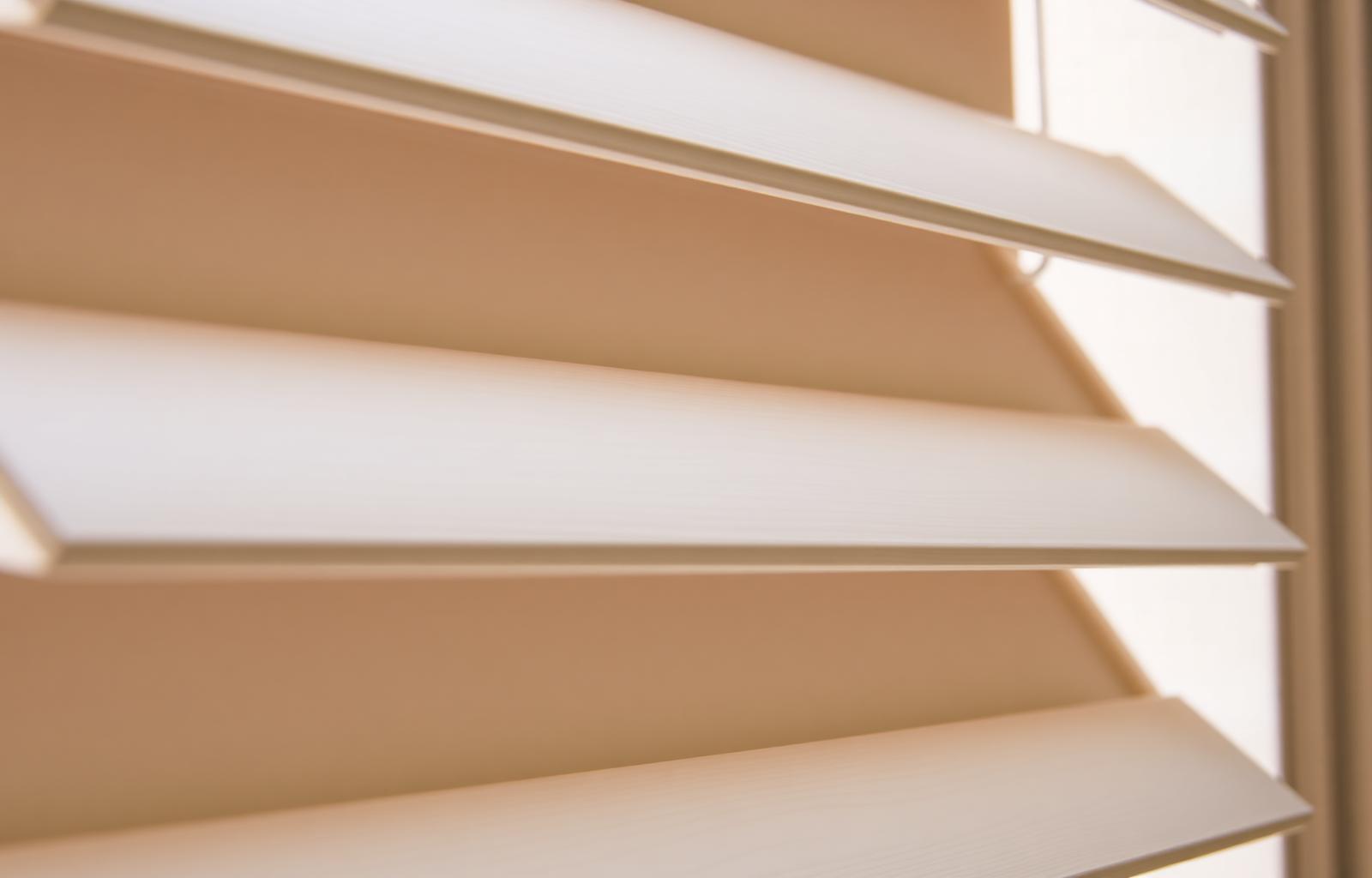
The material decision shapes everything downstream, from price to longevity to which rooms the shutters belong in.
Premium hardwood shutters, typically basswood, are the traditional luxury choice. They take stain beautifully, show grain through finish, and feel substantial in the hand. Basswood is dimensionally stable enough for Colorado's climate when properly finished. It is the right answer for living rooms, primary bedrooms, dining rooms, and any space where the shutters are part of the design statement.
Engineered composite shutters use a wood-polymer core with a durable painted finish. They will not warp, crack, or yellow. They are the correct choice for bathrooms, laundry rooms, kitchens near sinks, and any window exposed to moisture or extreme temperature swings. The finish quality on premium composite lines is indistinguishable from painted hardwood at normal viewing distances.
Vinyl shutters exist at a lower price point. We rarely specify them for Denver custom projects because the visual weight is wrong for the homes we work in, and the operating mechanisms tend to feel hollow. For investment properties or short-term rentals where budget is the priority, they have a place.
Louver Size and Light Behavior
Louver size is the second most-asked question in our showroom. The three standard sizes each create a different feel.
2.5-inch louvers are the traditional plantation profile. They create a tighter, more detailed look and suit smaller windows, transom shapes, and traditional architecture. They block slightly more view when closed.
3.5-inch louvers are the most-specified size in modern Denver homes. They offer the cleanest sightlines when open, the strongest view through when tilted, and feel proportionally correct on the larger windows common in Front Range new construction.
4.5-inch louvers are the contemporary, statement-making choice. On floor-to-ceiling windows or wide sliders, the larger louver reads architectural rather than fussy. The wider blade also allows more daylight in when tilted open.
Frame Styles That Match the Window
Frame selection is where shutters either disappear into a wall or call attention to themselves. The right frame matches the window opening and the trim package already in the room.
An L-frame wraps the inside of the window opening for a flush, built-in look. It is the right choice for windows with deep jambs and minimal existing trim.
A Z-frame projects slightly into the room with a finished casing, useful when the existing window has no trim or when the homeowner wants the shutter to add visual weight.
A deco frame adds a decorative profile around the shutter, working well in traditional and transitional homes where the millwork is already substantial.
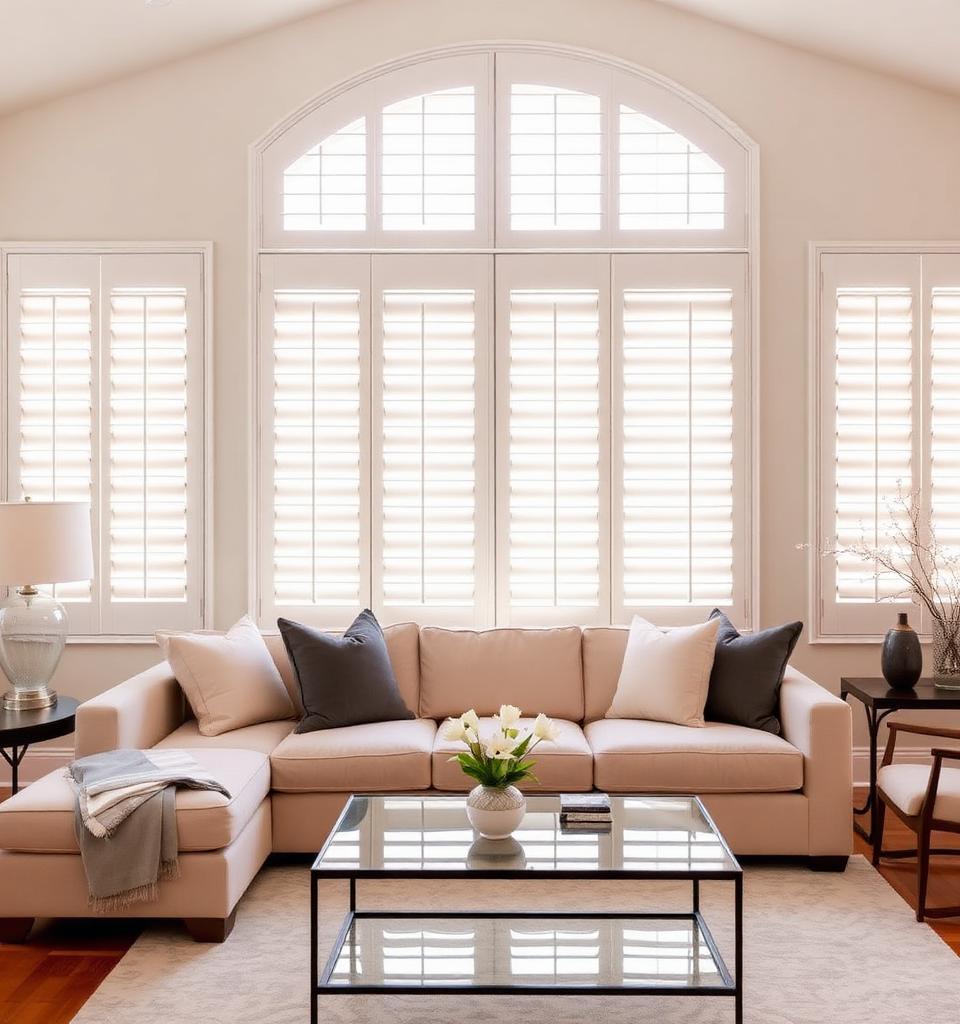
For unusual shapes, including arches, angled tops, and bay configurations, custom-built frames are standard at our level of work. We measure, template, and order each shutter for the exact opening rather than forcing a stock size.
How Shutters Behave in Colorado's Climate
Denver's altitude, intense UV, and dramatic temperature shifts are hard on window treatments. Plantation shutters handle this environment better than almost any alternative, with two important caveats.
Hardwood shutters need a sealed, multi-coat finish to resist the dry indoor humidity of a Colorado winter. Cheap factory finishes can crack along the louver edges over years of expansion and contraction. The hardwood lines we specify are factory-finished to furniture-grade standards specifically for high-altitude installation.
Composite shutters have no climate vulnerability worth discussing. They are the correct answer for any room where humidity, sunlight, or temperature exposure is the dominant concern.
Shutters and Resale Value
Among window treatments, plantation shutters consistently appear on appraiser checklists as a value-adding feature. The reason is simple. They are considered a permanent improvement that conveys with the home. Real estate professionals across the Front Range routinely note "shuttered windows throughout" as a marketing point, the same way they note hardwood floors or solid-core doors. For homeowners thinking about long-term value, shutters in primary rooms are one of the few window-treatment investments that returns at sale.
Where Shutters Belong, and Where They Do Not
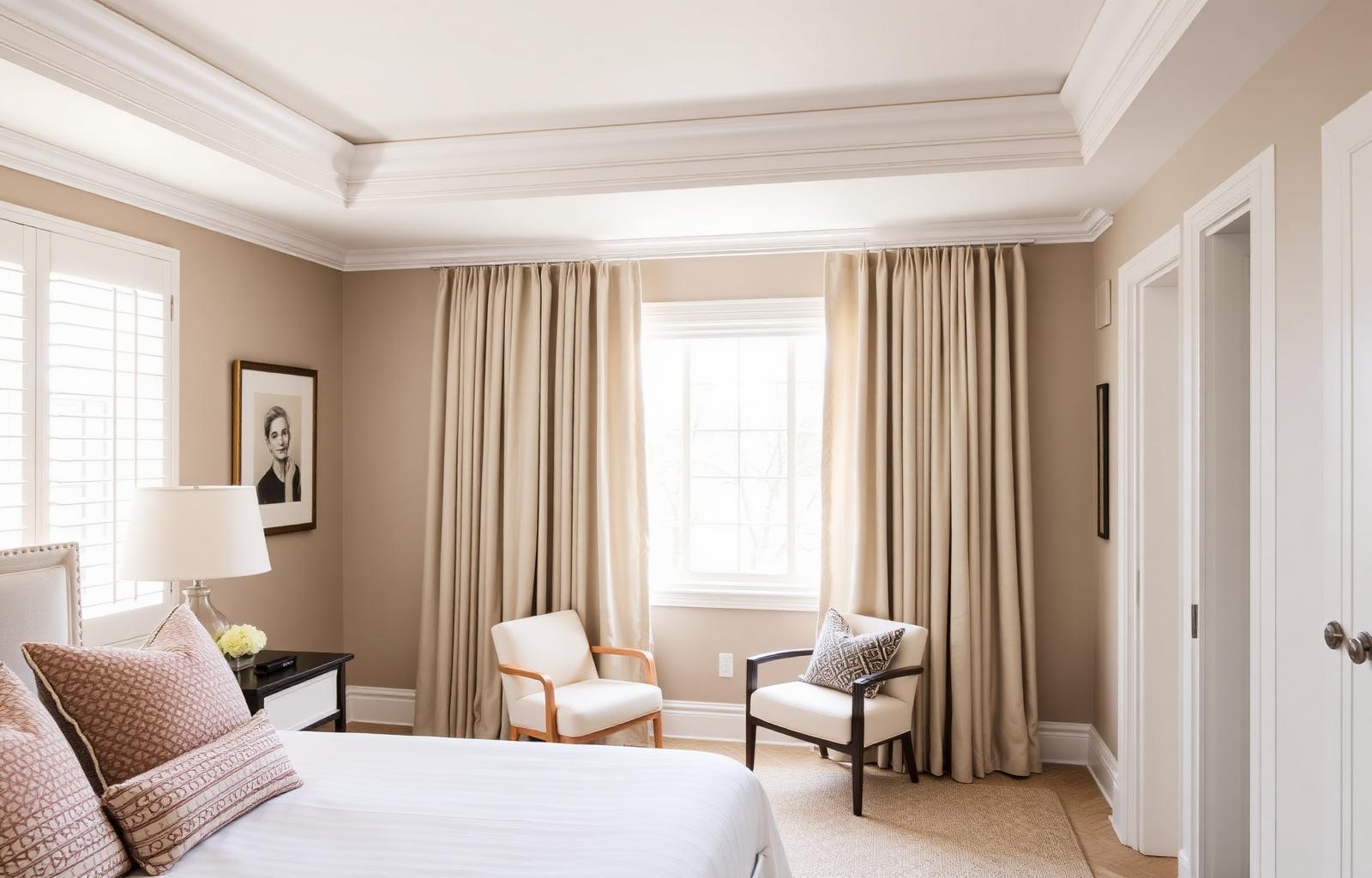
Shutters are the right answer for living rooms, primary bedrooms, dining rooms, home offices, and anywhere the architecture deserves a permanent treatment. They pair beautifully with layered custom drapery on the same window, with the shutter providing privacy and light control and the drapery providing softness and acoustic warmth.
Shutters are not always the right answer for media rooms requiring full blackout, for nurseries where sound dampening matters, or for kitchen windows over a working sink. In those rooms, roman shades, woven woods, or roller shades often perform better.
What to Expect from the Process
A Blinds Couture shutter project begins with an in-home consultation. We measure every opening, review your architecture, and discuss the rooms, the light, and how each space is actually used. From there we present material, louver, and frame options against your fabric, paint, and millwork. Manufacturing typically runs six to ten weeks depending on the line. Installation is precise, quiet, and clean.
If you are weighing shutters against blinds or shades for a specific room, our companion guide on choosing window treatments for your home walks through how to think about the decision room by room.
Frequently Asked Questions
How long do plantation shutters typically last in a Denver home?
Properly built hardwood or composite shutters routinely last 20 to 30 years or longer. The frame, hinges, and louvers are mechanical, not consumable, so the lifespan is limited only by the finish quality and the build precision. The lines we specify are engineered for Colorado's altitude and dry indoor air.
Are plantation shutters more expensive than blinds or shades?
Per window, shutters carry a higher upfront cost than most blinds or shades. They are also the only treatment that adds to home resale value, last decades, and never need replacement parts. Over a fifteen-year horizon, the cost per year of use is often lower than mid-tier shades that need replacing.
Can shutters be installed on arched, angled, or specialty windows?
Yes. Custom-built shutters can be fabricated for arches, angled tops, bay configurations, French doors, and sliders. Each opening is measured and templated individually so the shutter fits the exact geometry of the window.
How long does a typical shutter project take from consultation to install?
After your complimentary in-home consultation, expect six to ten weeks for manufacturing, then a single-day installation for most homes. Larger whole-home projects are typically installed over two to three days.
Can plantation shutters be motorized?
Yes. Motorized tilt is available on most premium shutter lines and is the right answer for tall installations where the tilt rod is out of reach. Our guide to motorized window treatments covers how this integrates with Lutron, Crestron, and other smart-home systems.
Serving Denver since 1999
Blinds Couture Showroom
590 Quivas St
Denver, CO 80204
(720) 729-0091

Blinds Couture
Denver's premier custom window treatment studio
With over 25 years serving Colorado homeowners and designers, Blinds Couture brings expert knowledge in custom drapery, blinds, shades, shutters, and motorized window treatments. Our team combines design expertise with hands-on craftsmanship to create beautiful, functional spaces.
Learn more about our team