Guide in Using Solar Screen Roller Shades
Are you thinking about solar shades for your home? Follow our ideas for using solar screen roller shades.
Updated October 5, 2026
Guide in Using Solar Screen Roller Shades
Colorado rewards its residents with over 300 days of sunshine a year. It also delivers some of the most intense ultraviolet radiation in the continental United States. At Denver's mile-high elevation, UV exposure is roughly 25% stronger than at sea level. In mountain communities, it climbs even higher. For homeowners who chose their home for the views, the light, and the connection to the outdoors, the challenge is clear: how do you manage the sun's intensity without closing yourself off from the very thing that makes Colorado living exceptional?
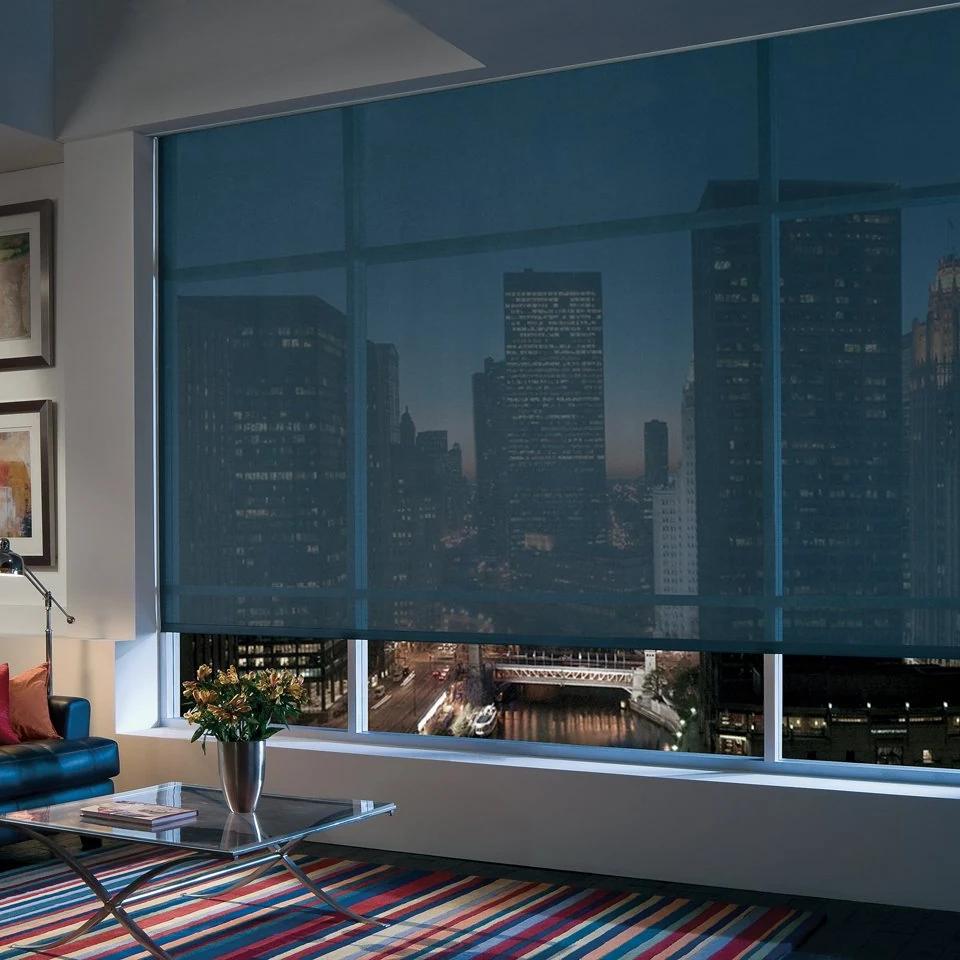
Solar screen roller shades are the purpose-built answer to that question. They filter sunlight, reduce glare, block UV radiation, and moderate heat gain, all while preserving your view of the world outside. No other window treatment delivers this specific combination of performance characteristics. This guide covers everything you need to know to specify, select, and get the most out of solar screen roller shades in your home.
How Solar Screen Roller Shades Work
A solar screen roller shade uses a specially woven mesh fabric stretched across a roller mechanism. The mesh is engineered with a precise openness factor, measured as a percentage, that determines how much light, UV, and heat pass through the fabric.
The weave is tight enough to intercept and redirect a significant portion of incoming solar radiation while leaving enough open space for you to see through the material from inside the room. From outside, the shade's surface reflects some light and absorbs the rest, making the interior difficult to see during daylight hours. The shade effectively functions as a one-way screen during the day.
The physics are straightforward. The tighter the weave (lower openness percentage), the more solar energy is blocked and the more the view is dimmed. The looser the weave (higher openness percentage), the more light passes through and the clearer the view remains. The right balance depends on the window's orientation, the room's function, and your priorities for light versus view versus UV protection.
Openness Factor: Choosing Your Percentage
Openness factor is the most important specification when selecting solar screen roller shades. It drives every aspect of the shade's performance.
1% Openness. The tightest commercially available weave for residential solar shades. A 1% shade blocks approximately 99% of UV radiation, reduces visible light transmission significantly, and provides the strongest glare reduction. The view through the shade is visible but muted, similar to looking through a fine screen door in low light. This level is ideal for west-facing windows that receive brutal afternoon sun, home offices where screen glare is the primary concern, and rooms where UV protection for furnishings and artwork is critical.
3% Openness. The most frequently specified openness factor across Blinds Couture's Denver and Front Range installations. A 3% shade blocks approximately 97% of UV radiation while maintaining a clear, comfortable view of the outdoors. Glare is significantly reduced without making the room feel dim. Colors and details in the landscape remain visible. This is the sweet spot for most living rooms, dining rooms, and great rooms where the balance between sun management and outdoor connection matters equally.
5% Openness. A more open weave that allows additional light and a slightly brighter view. UV blocking is still excellent at roughly 95%, and glare reduction is meaningful, though less aggressive than 3%. This works well on north- and east-facing windows where direct sun exposure is limited to morning hours, and in rooms where maintaining maximum brightness is the design intent.
10% Openness. The most transparent solar shade option. Light transmission is high, UV filtering is moderate (approximately 90%), and the view is nearly unobstructed. This level is best suited for covered patios, sunrooms, and windows that are already partially shielded by architectural overhangs or landscaping. In full Colorado sun, 10% may not provide sufficient glare or heat reduction for comfort.
The Performance Benefits in Colorado Homes
UV Protection for Furnishings and Floors. Colorado's UV intensity accelerates fading on hardwood floors, area rugs, upholstered furniture, and artwork. A solar screen roller shade with 1-3% openness blocks 97-99% of UV radiation, extending the life and appearance of your interior furnishings dramatically. For homes with significant investments in interior finishes and furnishings, solar shades are a protective layer that pays for itself over time.
Glare Reduction for Comfort. Glare on television screens, computer monitors, and even on polished surfaces like countertops and dining tables degrades the comfort of a room. Solar shades reduce glare to comfortable levels without darkening the room or eliminating natural light. The room stays bright. The light becomes even and workable.
Heat Gain Reduction. South- and west-facing windows are the primary source of solar heat gain in Colorado homes. On a sunny January afternoon, west-facing windows can drive interior temperatures up even as the outside air is below freezing. In summer, the effect is amplified. Solar screen shades intercept solar heat before it enters the room, reducing the load on your HVAC system and contributing to energy efficiency.
The energy savings are real and measurable. Studies show that solar shades can reduce cooling costs by 25-35% on windows with direct sun exposure. In a state where air conditioning runs hard from June through September and heating dominates from November through March, that reduction compounds across seasons.
For a broader look at energy-efficient and environmentally conscious window treatments, see our article: 5 Environmentally Friendly Window Treatments.
View Preservation. This is the benefit that distinguishes solar shades from every other window treatment. You do not have to choose between managing the sun and seeing the mountains. A properly specified solar shade lets you do both simultaneously. For homes in the foothills, on golf courses, or with city and mountain panoramas, this is not a luxury feature. It is the reason the home was designed with those windows in the first place.
Fabric Colors and Their Effect on Performance
Solar screen fabric comes in a wide range of colors, and the color you choose affects performance as meaningfully as the openness factor.
Lighter colors (white, cream, linen, light gray) reflect more solar energy away from the window. They reduce heat gain more effectively and keep the room brighter. However, lighter shades reduce visibility through the mesh. The brightness of the fabric relative to the exterior makes it harder for your eyes to resolve the view behind it.
Darker colors (charcoal, bronze, black, dark gray) absorb more solar energy and convert it to heat at the fabric surface. They reduce heat gain less effectively than lighter colors. However, darker shades provide significantly better view-through because the contrast between the dark fabric and the bright exterior allows your eyes to see through the mesh more clearly.
The practical recommendation for most Colorado homes is a medium-tone fabric in the 3% openness range. Charcoal, bronze, and medium gray are the most popular choices because they balance heat rejection, view clarity, and aesthetic neutrality. Your Blinds Couture design consultant brings fabric samples so you can see the color and openness factor against your actual windows and views.
Inside Mount vs. Outside Mount
Solar screen roller shades can be mounted inside the window frame (inside mount) or on the wall or trim above and beyond the frame (outside mount). The choice affects both appearance and light control.
Inside mount creates the cleanest, most architectural look. The shade sits flush within the window frame, and the headrail and side channels are concealed by the frame itself. Inside mount requires sufficient depth inside the window frame for the roller mechanism, and it leaves a small gap on each side between the shade and the frame where light can enter.
Outside mount covers the entire window opening plus additional wall space on each side. This eliminates light gaps around the perimeter and provides more complete sun coverage. Outside mount is recommended for windows where light gaps are unacceptable, for shallow window frames that cannot accommodate an inside-mounted roller, and for situations where you want the shade to visually enlarge the window opening.
For the most complete light control on south- and west-facing windows, outside-mounted solar shades with side channels (light-blocking tracks that seal the gap between the shade and the wall) deliver the best performance.
Motorization and Automation
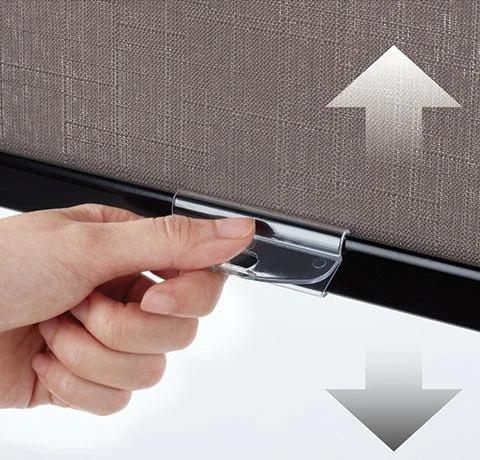
Solar screen roller shades are one of the most popular products for motorized operation. The combination of sun management and automation creates a system that responds to the sun's movement throughout the day without any manual intervention.
Motorized solar shades from Lutron and Hunter Douglas can be programmed to lower automatically when the sun reaches a specific angle on west-facing windows, then raise again at sunset. Whole-home scenes coordinate every shade to the time of day, the season, or your daily routine.
For smart-home integration details and cordless operating systems, see our guide: The Best Cordless Blinds and Cordless Window Shades for Right Now.
Layering Solar Shades with Other Treatments
Solar shades excel at daytime sun management, but they do not provide nighttime privacy on their own. The most sophisticated installations layer a solar shade with a secondary treatment that handles what the solar shade cannot.
Solar shade + blackout roller shade (dual roller system). A dual roller bracket or cassette holds two shades on a single headrail. The solar shade operates during the day for glare and UV control. The blackout roller lowers at night for complete privacy and darkness. This combination is the gold standard for bedrooms and primary suites with significant sun exposure.
Solar shade + decorative drapery. Solar shades handle function. Drapery panels handle beauty. The solar shade manages light throughout the day while the drapery frames the window with fabric, color, and texture. This layered approach is popular in living rooms, dining rooms, and great rooms where the window treatment needs to be both high-performing and visually compelling.
For more on drapery options that pair with solar shades, see our comprehensive guide: The Complete Guide to Choosing Elegant Custom Drapery with Blinds Couture.
Specifying Solar Shades for Your Home
The right solar shade specification starts with understanding how the sun interacts with each window in your home. Window orientation, time of day, seasonal sun angle, and the presence of exterior shading (trees, overhangs, neighboring structures) all influence the recommendation.
Blinds Couture's complimentary in-home consultation evaluates every window and provides tailored recommendations for openness factor, fabric color, mounting method, and operating system. The goal is a solution that manages the sun precisely, protects your interior, preserves your view, and integrates seamlessly with the design of your home.
Schedule Your Complimentary Design Consultation
Blinds Couture is Denver's premier custom window treatment studio, offering solar screen roller shades, roller shades, roman shades, drapery, and more from Hunter Douglas, Graber, Norman, Lutron, and other premium brands.
Serving Denver since 1999
Blinds Couture Showroom
590 Quivas St
Denver, CO 80204
(720) 729-0091
Blinds Couture
Denver's premier custom window treatment studio
With over 25 years serving Colorado homeowners and designers, Blinds Couture brings expert knowledge in custom drapery, blinds, shades, shutters, and motorized window treatments. Our team combines design expertise with hands-on craftsmanship to create beautiful, functional spaces.
Learn more about our team