Exterior Solar Screens in Denver: Patio Shade, Heat Control, and What to Ask Before You Buy
Learn how exterior solar screens shade Denver patios, compare them with indoor solar shades, and plan for weather, operation, and installation.
Updated October 5, 2026
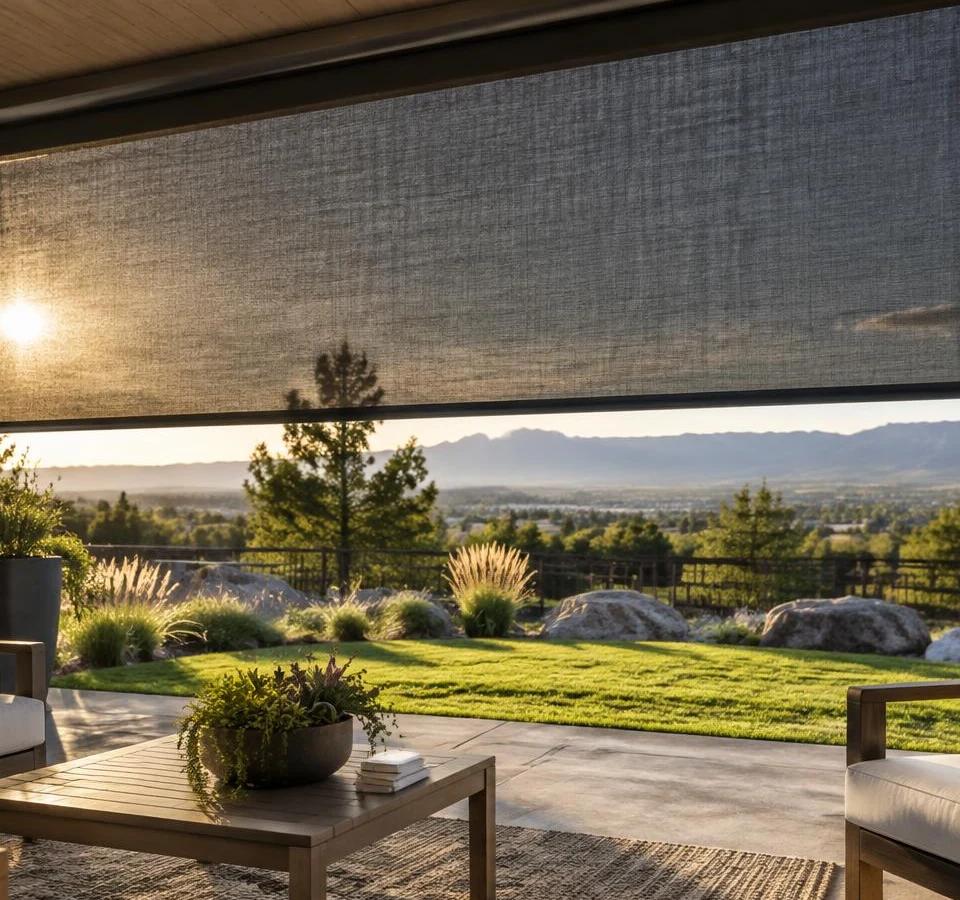
Exterior solar screens in Denver shade outdoor openings before the sun reaches a patio or nearby glass. The fit depends on exposure, mounting space, wind, and how you use the area. Our Denver summer window treatments guide puts outdoor screening alongside indoor options.
For indoor winter comfort alongside outdoor sun control, compare categories in our Denver energy efficient window treatments guide.
What is an exterior solar screen, and how is it different from an interior solar shade?
An exterior solar screen is a woven shade installed outside, often at the open edge of a covered patio or in front of a window. An interior solar shade hangs inside the house. The exterior placement intercepts direct sunlight earlier, while the interior shade manages glare and privacy within the room. Neither is a substitute for evaluating the actual exposure.
For a room with a difficult afternoon view, compare interior options in our solar versus roller shades guide. A patio needs a different discussion: the screen, its side clearances, and the weather it will encounter matter as much as fabric color. An indoor shade remains protected from outdoor weather, while an exterior product needs installation and care appropriate to the opening.
Where do exterior screens make sense around a Denver home?
West-facing covered patios often receive low afternoon sun just when people want to sit outside. A screen can soften that light at the patio edge. Decks and pergolas may be candidates too, but only when their structure offers a suitable place to mount and operate the screen safely. Review the shade line at the time you normally use the space.
On the Front Range, September sun can still feel intense. Shade needs vary across a single house: the sheltered dining side may be comfortable while a west-facing lounge remains exposed. Note where glare falls on tables, seating, and doors. Also look at obstructions such as lights, railings, and trim that might interfere with a lowered screen.
An open pergola is not the same as an enclosed patio. It may require a different mounting strategy, and an unsupported edge may rule out a preferred system. An on-site assessment should address the structure before anyone recommends fabric or controls. For window treatments inside the adjacent room, see motorized shades in Denver.
How do interior solar shades and exterior screens compare?
Both products filter bright light, but they work at different points in the opening. An interior solar shade can be useful for a living room window where weather protection and ease of indoor cleaning matter. An exterior screen is designed for an appropriate outside opening where patio shade is the primary goal. Placement affects the view in either case.
| Consideration | Interior solar shade | Exterior screen |
|---|---|---|
| Where it sits | Inside the window or room | Outside a window or patio opening |
| Heat blocking approach | Filters sunlight after it passes the glass | Intercepts direct sun before it reaches the opening |
| View | Filtered through the selected weave | Filtered from the patio or exterior edge |
| Wind | Sheltered indoors | Must be used within the product's weather guidance |
| Maintenance | Indoor dusting and fabric care | Outdoor debris and weather exposure |
| Best rooms or areas | Living rooms and other indoor windows | Suitable covered patios and outdoor openings |
The comparison is a starting point, not a performance guarantee. Color, weave, sun angle, frame depth, and surrounding architecture can change what feels comfortable. Ask to see samples in the light where the product will actually be used.
What should you know about wind, hail, and everyday weather?
Exterior screens face changing weather, so operation should follow the specific manufacturer's guidance. In windy conditions, retracting a screen may be necessary; hail is a reason to bring it up when it is safe to do so. A screen should not be presented as a storm barrier. Ask how the system handles exposure and what its warranty excludes.
An exposed upper deck and a sheltered covered patio do not have the same conditions. Wind can move fabric or place stress on guides and hardware, particularly when a screen is left lowered without supervision. A professional should explain the system's limits and show you how to retract it. Avoid assuming that a motor makes weather decisions for you unless a compatible sensor is actually specified and installed.
After dust, pollen, or a storm, follow the fabric maker's cleaning advice and inspect the tracks before operating the shade. If a product offers an automatic feature, ask what happens during a power outage and whether a manual override is available.
Should you choose a manual or motorized exterior screen?
A manual screen may be practical for a smaller, easily reached opening. Motorized operation is worth discussing for wide openings, frequent daily use, or controls that need to be convenient from indoors. The best choice depends on the opening, power access, placement, and how often the screen will move, not on a promise that one option suits every patio.
Motorization can make a shaded patio easier to use throughout the day, especially when the sun shifts while you entertain. It also means planning for wiring or an available power option, a control location, and service access. Ask the installer to demonstrate how the screen moves and stops. Our motorized shades cost guide explains the factors that affect a quote without treating every opening as identical.
If you prefer a simple pull, verify the mechanism is reachable without stepping onto furniture. If you prefer automation, clarify what you can control individually and whether a group scene is supported by the proposed equipment. Keep both usability and safe operation in the conversation.
What should be measured before installation?
Measure the full opening, not just the width you hope to shade. An installer should confirm the mounting surface, side clearances, headroom for the housing, the path of the lowered fabric, and any interruptions from doors, lighting, or railings. Measurements for a screen on an exposed patio also need to reflect the actual structure that will support it.
Look at what happens when an exterior door swings, when outdoor furniture moves, and when people walk through the opening. A screen that looks centered on paper may conflict with a railing or trim. For a pergola, check whether the proposed mounting point is structurally suitable rather than assuming every beam will work. An accurate site visit can also reveal whether a different treatment belongs on the adjacent glass instead.
Ask how the housing looks when retracted and remember that daytime views and nighttime privacy differ.
What should you ask before buying exterior solar screens?
Ask which openings qualify, what the screen does in wind, how it retracts, and what maintenance the fabric and tracks need. Ask to see the chosen weave in direct afternoon light and request an explanation of power, controls, and service access. A proposal should name the product and installation approach.
For a tailored recommendation, explore exterior screens in Denver and request a site-specific consultation. The right screen is the one you can use and maintain confidently in the conditions at your home.
Frequently asked questions
Do exterior solar screens replace interior shades?
Not necessarily. An exterior screen shades an appropriate outdoor opening; an interior shade controls light inside the room. Some homes benefit from both in different locations, depending on exposure and privacy needs.
Can an exterior screen stay down during a storm?
Follow the guidance for the chosen product. Wind and hail can affect exterior fabric and hardware, so discuss when and how to retract the screen with your installer before relying on it.
Will a screen block the view of the foothills?
A woven screen can preserve a filtered daytime view, but the result depends on openness, fabric color, sunlight, and viewing angle. Ask to examine a sample at the opening before choosing.
Can a pergola support an exterior screen?
Possibly, if the structure provides suitable support and clearance for the proposed system. Have the opening assessed rather than assuming every pergola beam or post is a suitable mounting point.
Is manual operation better than motorized operation?
Neither is automatically better. Manual operation can be straightforward for a reachable opening, while motorization may be more convenient for frequent use or wide spaces. Confirm controls and access before deciding.
Where should I start with a west-facing patio?
Observe the patio at the hour you want to use it, photograph the glare, and note doors, railings, and furniture. A site visit can then compare the practical outdoor screening and indoor shade options.
Serving Denver since 1999
Blinds Couture Showroom
590 Quivas St
Denver, CO 80204
(720) 729-0091
Blinds Couture
Denver's premier custom window treatment studio
With over 25 years serving Colorado homeowners and designers, Blinds Couture brings expert knowledge in custom drapery, blinds, shades, shutters, and motorized window treatments. Our team combines design expertise with hands-on craftsmanship to create beautiful, functional spaces.
Learn more about our team