Motorized Skylight Shades in Denver: How They Work and When You Need Them
Compare skylight shade fabrics, motorized controls, power options, and installation details for bright Denver rooms with overhead glass.
Updated October 5, 2026
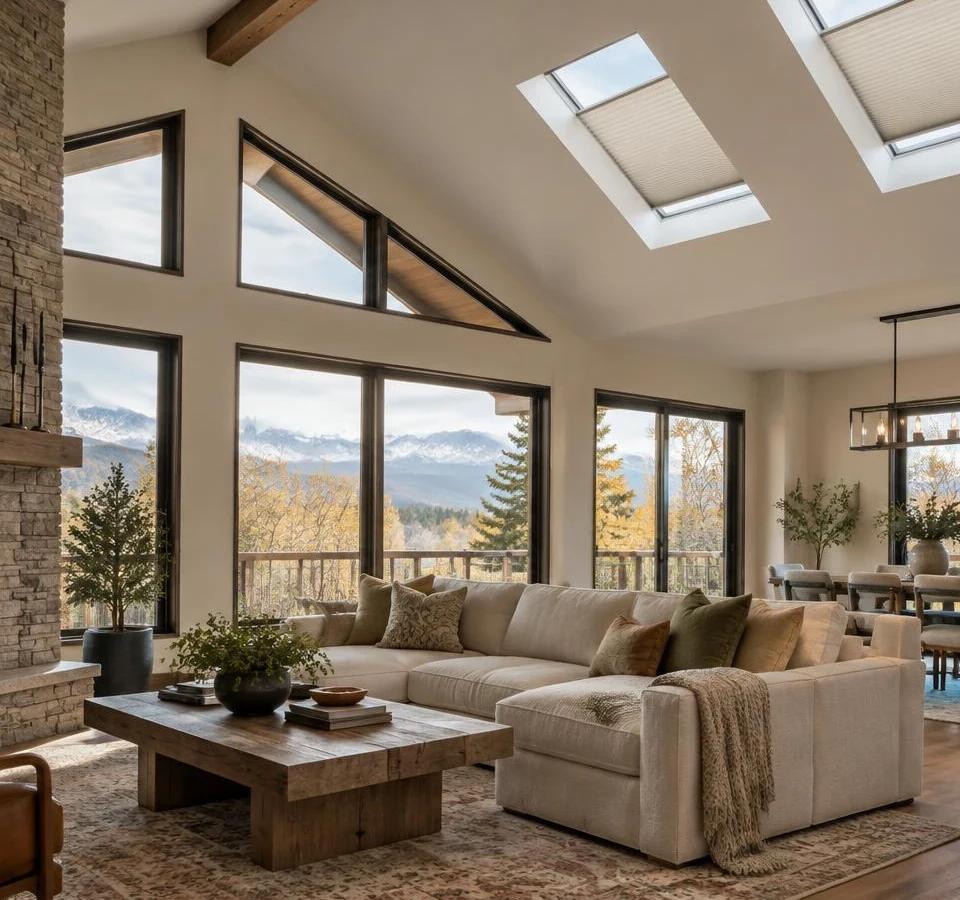
Motorized skylight shades in Denver let you adjust hard-to-reach overhead glass without reaching for a pole or ladder. They can soften glare and help you manage bright rooms, but the right shade depends on the skylight shape, mounting angle, access, and available power. Start with our motorized window treatments guide for the broader control options.
Why can a Denver skylight make a room feel too bright or warm?
A skylight receives light from overhead, often directly into a living area, stairwell, or work surface. In Denver's clear high-altitude light, that can mean noticeable glare and warmth even when wall windows feel comfortable. A properly fitted skylight shade changes how much light enters the room, while leaving the skylight itself in place.
The sun angle changes during the day and across seasons. September may bring welcome light in the morning and glare later when someone reads or works below the glass. The same opening can be welcome in winter and difficult during warmer afternoons. A shade gives you a way to respond without permanently covering the skylight.
Look at the exact moment the room becomes uncomfortable. If the issue is a reflection on a screen, light filtering may be enough. If you need a darker bedroom, discuss room-darkening fabrics and the effect of edge light. Do not assume that one fabric provides identical results for every roof angle or frame.
Which shade types work in skylights?
Cellular, roller, and pleated skylight shades are common categories to compare, subject to the skylight model and available hardware. Cellular designs bring a softer, more buffered feel; rollers offer a clean plane of fabric; pleated styles provide a compact folded look. Confirm the system works at your opening's angle and size.
| Shade type | Light control | Insulation feel | Best for |
|---|---|---|---|
| Cellular | Light filtering or room darkening by fabric choice | Layered, buffered feel from the cellular construction | Rooms needing softer light and a finished ceiling look |
| Roller | Varies with selected fabric and edge fit | Simple fabric plane rather than a cellular layer | Contemporary spaces favoring a minimal look |
| Pleated | Depends on weave and liner options | Fabric-dependent, without the same cellular structure | Compact folded styling where compatible hardware fits |
Each category includes different fabrics and mechanisms. Request samples under your skylight rather than judging from a wall-window sample. Confirm that the installer is specifying a skylight-rated system, including guides or tensioning where needed so fabric stays controlled on sloped glass.
When is motorized operation better than a manual pole?
A manual pole can make sense for an accessible, compatible skylight that you rarely adjust. Motorization is useful when the ceiling is high, the glass is over furniture or stairs, or you want to move shades together from a control. Choose based on reach, frequency of use, and whether the selected skylight product supports your preferred power option.
A pole still needs a clear path and a place to store it. In a vaulted great room, using it may be awkward near a sofa or chandelier. Motorized controls remove that daily reach but add planning for power and eventual service. Compare the real routine: will you open the shade every morning and close it in the afternoon, or rarely change it?
For other hard-to-reach glazing, our two-story window treatment guide discusses accessibility. If you are comparing costs across openings, see what affects motorized shade pricing. A skylight quote should still be evaluated on its own fit and installation conditions.
How can motorized skylight shades be powered?
Depending on the product, a motorized skylight shade may use a rechargeable or replaceable battery, a hardwired electrical connection, or a solar accessory where offered. Each option changes how the shade is installed and serviced. Ask the installer to identify the actual compatible option for your skylight rather than assuming every power source works with every frame.
Battery power avoids new wiring but needs charging access. Hardwiring requires electrical planning. A compatible solar accessory needs a suitable location. Ask where every component will sit.
Discuss what the shade does if power is interrupted, how to reset its controls, and how future service will reach the motor. A tidy installation is one where power planning is as deliberate as fabric selection. Our home automation options provide context if you want coordinated controls elsewhere in the house.
Can skylight shades join smart home scenes?
Many motorized systems can be grouped or scheduled when their controls and hub are compatible. A scene might lower the skylight shades when afternoon glare reaches the great room, then raise them to admit softer light later. Confirm the proposed system's actual integration rather than assuming that all motors work with the same voice assistant or home platform.
A single control for skylights and nearby windows can simplify an open room. Ask for a demonstration of both grouped and individual operation.
If you already have connected lighting or other shades, share the platform name during the consultation. Integration may require a compatible hub or controller. A clear proposal should distinguish native features from optional accessories and avoid promising a scene that the specified hardware cannot perform.
What makes measuring angled or high skylights different?
Overhead openings require accurate measurements of the skylight recess, angle, frame, and any obstruction to the shade's travel. High ceilings add access planning for installation, power, cleaning, and service. An installer should inspect the exact skylight and confirm the chosen shade is compatible before ordering, rather than treating it as an ordinary vertical window.
A sloped opening may need a guided or tensioned mechanism to keep fabric in place. Handles, vents, trim, and the opening action of the skylight can all affect the fit. If the skylight opens, make sure the shade does not interfere with ventilation or maintenance. What looks like a simple rectangle from the floor can have important details visible only up close.
Consider how the cassette, tracks, and power supply look against the ceiling, plus access for future service.
What should you ask before choosing a skylight shade?
Ask whether the shade is approved for your skylight model and angle, how it stays aligned, where its power comes from, and how you will maintain it. Request fabric samples in the room and a demonstration of controls. Make sure the proposal explains installation access and what is included in the finished appearance.
Describe whether your main concern is glare, sleep, privacy from nearby sightlines, or a softer room during sunny afternoons. The answer will guide fabric and operating choices. Ask about edge light if you want a dark room, and discuss whether the skylight needs to remain operable. Different priorities can lead to very different selections even for identical openings.
Explore motorized skylight shades in Denver and arrange a consultation for a site-specific recommendation. For a nearby outdoor space affected by the same afternoon sun, our exterior solar screens guide covers the distinct considerations outside the home.
Frequently asked questions
Do all skylights accept motorized shades?
No. Compatibility depends on the skylight, its dimensions and angle, and the shade system. A professional should confirm the specific opening and mounting details before a product is ordered.
Will a skylight shade make a bedroom completely dark?
Room-darkening fabrics can reduce light, but edge gaps and the skylight frame may still admit some light. Ask to see the proposed system and discuss expectations for the actual installation.
Can I use a manual pole instead of a motor?
A manual pole may work when the skylight and shade support it and the operating point is reachable. Consider furniture, stairs, and how often you expect to move the shade.
What happens when the shade battery needs charging?
That depends on the selected system. Ask where the charging point is and how you will reach it safely. Service access should be planned before installation, especially on a tall ceiling.
Can I operate two skylight shades together?
Compatible motorized products can often be grouped through their controls. Confirm what the proposed system supports, including whether each shade can still be adjusted individually.
Does a skylight shade interfere with an opening skylight?
It should not when the correct compatible system is specified and installed. Tell your designer if the skylight opens or vents so the operating clearance is evaluated before ordering.
Serving Denver since 1999
Blinds Couture Showroom
590 Quivas St
Denver, CO 80204
(720) 729-0091
Blinds Couture
Denver's premier custom window treatment studio
With over 25 years serving Colorado homeowners and designers, Blinds Couture brings expert knowledge in custom drapery, blinds, shades, shutters, and motorized window treatments. Our team combines design expertise with hands-on craftsmanship to create beautiful, functional spaces.
Learn more about our team